
Freddie De Tommaso on Opera, Identity, and the Art of Being Yourself
Freddie De Tommaso’s story invites the word “destiny.” What defines it, however, is a musical identity shaped long before the spotlight. Raised in a home where Classic FM hummed steadily and church music set the rhythm of Sundays, he absorbed opera before he ever chose it. What began as atmosphere became orientation
In this edition of The Voice in Twelve Keys, I sat down with Freddie not only to speak with the tenor, but to sketch a portrait — exploring the person behind the roles and the self that remains within the music. I am drawn to that quiet place where voice, intellect, and identity meet, and how naturally they align.
Today, as one of the most closely watched tenors of his generation, he moves through opera’s great roles, contemporary staging debates, and the persistent comparisons to past masters with grounded clarity: sing as yourself, be shaped, but not overshadowed by history and let the music carry its own authority.
Recognition came early. In 2018, he won First Grand Prize at the Tenor Viñas Competition, a distinction that led to the Opera Studio of the Bayerische Staatsoper and, soon after, significant debuts. He opened the 2020–21 season of the Wiener Staatsoper as Pinkerton in a new production of Madama Butterfly.

Freddie De Tommaso as Mario Cavaradossi in Tosca at the Royal Opera House – Covent Garden 10 December 2022
© 2022 ROH Photographed by CLIVE BARDA
In December 2021, he stepped in as Cavaradossi at the Royal Opera House, at 28, the youngest tenor to sing the role there and the first Brit to do so since 1963. That performance marked a decisive moment in his international ascent.
An exclusive artist with Decca Classics and the label’s first tenor signing in over a decade, he has matched stage success with recording distinction. His debut album Passione entered the classical charts at number one and earned the BBC Music Magazine Award for Best Newcomer. Il Tenore followed with similar success, its rendition of Nessun Dorma surpassing one million streams. In 2024, he marked the Puccini centenary with the EP Puccini.
Opera was never distant but woven into everyday life. “It was just… everywhere at home, in the car, at my father’s restaurant. He adored opera” he says “like the soundtrack to my childhood. Even without full awareness, it goes in. You develop an appreciation without realizing.” By the time formal exposure came, Glyndebourne, the Royal Opera House, children’s performances with his brothers, the foundation was already laid.
Music was encouraged by his parents not as career strategy but as part of his upbringing: piano lessons without pressure, choir rehearsals, a first teacher, “Mrs. Johnson, I still remember her name,” he smiles. There was no early ambition. The calling simply became undeniable.
One question returns: why does opera, with all its emotional magnitude, still feel inaccessible to so many? He reframes it. “Sitting in an opera for three or four hours is unlike anything else we do now.” The issue is not exclusivity but habit. We are accustomed to interruption. Opera demands sustained attention, often in words we do not speak. “It’s immersive,” he says. And immersion has become unfamiliar.
Yet opera is not distant. The barrier is often preliminary: begin with the story. “Read the synopsis on the way. Know who is singing to whom, whether father, lover, or rival.” Once the relationships are clear, the music stops feeling abstract. It becomes human and legible.
If opera demands sustained attention, it is because its composers built it that way. Naming just one is never easy, nor is comparison straightforward. “If it’s gun to the head,” he concedes, “then it is Verdi.”

Freddie De Tommaso in Keith Warners production of Otello at ROH 2019 Photo©Catherine Ash
He speaks of composers as following different dramatic arcs. Verdi is the architect of drama, tension projected through music with structural precision. Puccini allows emotions to lead. “Unbeatable,” he says of that immediacy. “You leave Rigoletto or Otello differently than Manon Lescaut. Both are extraordinary, but different.” One persuades through structure, and the other overwhelms through emotion.
There is a particular spark in his voice when he speaks of the verismo repertoire and its emotional candor. His recent world premiere of Umberto Giordano’s Marina embodies that fascination: the richness of the score, the audacity of its youthful composer, and the responsibility of giving first breath to unheard music.
The score lays the foundation, and while Verdi constructs and Puccini ignites, only the one who steps into it can make it breathe. Freddie was an actor before he was a singer, and that beginning defines his approach.
Asked which role he could return to endlessly, he names two: “Cavaradossi is fantastic. But Riccardo from Un Ballo in Maschera as well. I love singing and playing that character.” A role extends beyond vocal terrain into psychological space.
Role development begins within the music and the libretto, in structure and psychology, before moving to staging. When a role originates in literature, the source becomes essential; opera compresses narrative, and context restores depth. Carmen illustrates the point. “Without knowing Don José’s past, his aggression can seem abrupt. With that knowledge, it becomes grounded.” Listening to historic recordings is equally part of the preparation.
Preparation finds its meaning in performance. Asked about his emotional state on stage, he replies simply, “Excited. I love my job.” For him, performance is not confrontation but release.
He invokes an old saying among actors: rehearsal is the work, performance is the relaxation. Preparation refines and resolves problems. By the time the curtain rises, tension should not be visible. “If you’re tight and tense, the audience feels that immediately.” He is critical of visible strain, inhabiting the moment is key.
The stage ignites him, but it is not where his energy is sustained. Renewal happens away from the spotlight: in family, in friends, in the quiet return to ordinary rhythms that restore perspective. It also lies in the discipline of protecting his health and voice, preserving the balance that allows each return to the stage to feel new.
Has he ever been consumed by a role? “No.” There is always separation. “You’re an actor. A singing actor.” A boundary remains, a sense of “Freddie” beneath every costume.
That boundary between self and role also shapes how he responds to contemporary direction. Opera today is increasingly defined by directorial vision. In the age of live broadcasts and unforgiving close-ups, psychological nuance is no longer implied but fully exposed. Directors have, inevitably, become central figures.
There is no resistance to that reality. For him, however, order still matters: “Drama must serve libretto.” He draws a clear distinction between reinterpretation and contradiction. A director may relocate story in time or recalibrate aesthetics, yet internal logic of music cannot be disregarded without consequence.
He acknowledges that when staging pulls against score, when weakness is imposed where music suggests strength, or fragility where line implies resolve, something unsettles. “And yet, in performance, music has a way of reasserting itself,” he notes.
While the director shapes the visual world, the conductor shapes its pulse. When we speak about conductors, he distinguishes between routine and creation.
In new productions, with four, five, sometimes six weeks of rehearsal and the conductor fully present, the opera is built collaboratively. Tempi and phrasing take shape alongside the broader dramatic pacing. “You really make it,” he says. The contrast with revivals is evident: a handful of days, efficient and professional, yet inevitably more mechanical.
With Luisa Miller, under Michele Mariotti at the Vienna State Opera, he found the former. It was their first collaboration, and the musical dialogue felt immediate. “Fantastic,” he says. They will reunite next season for another major project, a prospect he clearly anticipates with enthusiasm.
From musical and theatrical collaboration, our conversation turns to the visual language of staging and costume. “It can be very good or very bad. It just depends,” he says. In David McVicar’s Adriana Lecouvreur, eighteenth-century attire altered not only appearance but movement. “It completely puts me in the character.”
The contrast can be stark. In a recent Luisa Miller, placed in an old-fashioned nightgown disconnected from the character’s reality, he found the experience destabilising. “It ruins the energy for me. It makes me self-conscious.” When external image contradicts internal truth, performance suffer, costume, he insists, makes a “huge, huge difference.” The trend toward generic modernisation, “jeans and a jumper,” risks diluting character. “I need the costume of the time to be the character, or at least aligned with the character’s identity.”
On stage, partnership is exchange. Having shared the stage with remarkable artists across generations, I ask what defines the ideal partner.
He reaches for a metaphor. “It’s like tennis,” he says. “You send the ball across the net, and they return it stronger. You respond with greater clarity, sharper intention. They answer again, stronger still.” It is not a battle but an energising exchange, each pushing the other toward something more. “The best ones bring out the best in your own performance.”
For him, challenge is a gift. There have been moments, he reflects, when standing opposite a seasoned colleague reshaped his understanding of the craft. The first time he sang Macbeth alongside Lucas Salsi, he found himself learning in real time how Verdi’s language can be carried. “Apart from Salsi, there were many others. I learned so much.”

Freddie De Tommaso in Oliver Mears’ Tosca at ROH September 2025 Photo©Marc Brenner
Beyond immediate collaborators on stage, the grand maestros of the past remain invisible ones. Opera lives within their legacy through recordings, stories, and the echo of their voices. For a young tenor, that inheritance is both gift and expectation. “They show you what can be done,” he says. “Stylistically, a lot.”
During his transition from baritone to tenor, he entered a period of intense recalibration. To master the passaggio and upper register, he studied voices close to his own, searching for technical clues. Franco Corelli remains a principal role model. He speaks with particular fascination about early recordings, singers working alongside composers themselves: Enrico Caruso singing Adriana Lecouvreur with Francesco Cilea at the piano. “That’s exactly how it’s meant to be. Incredibly valuable.”
What amuses him, though not without incredulity, is the reflex to compare him and his generation to legends at full maturity. Among others, he cites Carlo Bergonzi, who sang professionally as a baritone until his mid-thirties before emerging as the tenor history remembers. “You don’t know how they sounded at my age,” he says. “Wait until I’m forty. Then compare me.”
He questions comparison itself. Even Pavarotti, Corelli, and Del Monaco, he suggests, defy such measurement. To compare them is like comparing a sprinter, a middle-distance runner, and a marathoner.
As the past offers guidance, the present becomes preparation for what lies ahead. Having achieved much in a short time, he has never questioned his direction. Things are unfolding as he hoped, with one crucial caveat: in major repertoire, especially Verdi, you only get one debut. Luisa Miller is behind him; Aida and Otello lie ahead, roles to be approached step by step. He prefers new productions, where rehearsal allows deeper work with score and conductor, but opera schedules rarely follow ideal sequencing.
Theatres do not endlessly commission new stagings. Sometimes career planning requires, as he puts it, “jumping over one rung of the ladder.” He had hoped to sing Il trovatore before La forza del destino, yet no new Il Trovatore appeared while a new Forza did. The same applies in Puccini: he would rather reach La fanciulla del West before Manon Lescaut, but repertoire seldom unfolds in perfect order.
Naturally, I return to Otello. “Yes, it’s probably the last one,” he says, though he is less intimidated than legend suggests. “If you look at the music, there is other repertoire that is much more dangerous.”
In his view, caution around Otello has always been more psychological than vocal. The great tenors waited not because the score was untouchable, but for dramatic maturity. “It’s not about the singing.” History supports his point: at the premiere, Verdi had imagined a sweeter voice than Francesco Tamagno’s, yet Tamagno created the role nonetheless.
“So yes,” he says calmly, “I’m not going to sing Otello tomorrow. But I’m also not going to wait another ten years.”
True to his approach, the path ahead is already taking shape with several major appearances on the horizon: a house debut at the Opéra National de Paris as Cavaradossi in Tosca, followed by the role again at the Deutsche Oper Berlin; Pollione in Norma at the Staatsoper Unter den Linden; Don José in Carmen at the Vienna State Opera; and La Bohème at the Royal Opera House and at the Festival Puccini in Torre del Lago. And then, notably, a new Macbeth at the Metropolitan Opera.
Ultimately, every ascent meets its audience, so I ask which listeners he finds most demanding and what message he would send to opera lovers everywhere.
“Spain and Italy,” he answers without hesitation. “In this repertoire, they carry a sense of ownership.” They know when it is right and when it is not. They do not forgive easily, but they reward just as fiercely.
His message to opera lovers is direct: keep coming to the opera, and bring young people with you. “We need that. We really need that.”

Freddie De Tommaso as Rodolfo in La Boheme at the ROH 2022 Photo©Clive Barda
As our conversation draws to a close, the portrait of Freddie De Tommaso comes into focus, extending beyond the voice to the person who shapes it. What stays with me most is his openness and his grounding. Music runs deep within him, yet he approaches it with both responsibility and ease. The alignment feels unforced. Drama serves the music, history guides but does not confine. Beneath every role, the core remains intact.
“Always sing like Freddie.” A credo, modest in phrasing yet resonant in an art form shaped by inheritance, comparison, and expectation.
What emerges is not only a tenor rising through the canon, but an artist shaping a career meant to endure.
Caterine N.Andro
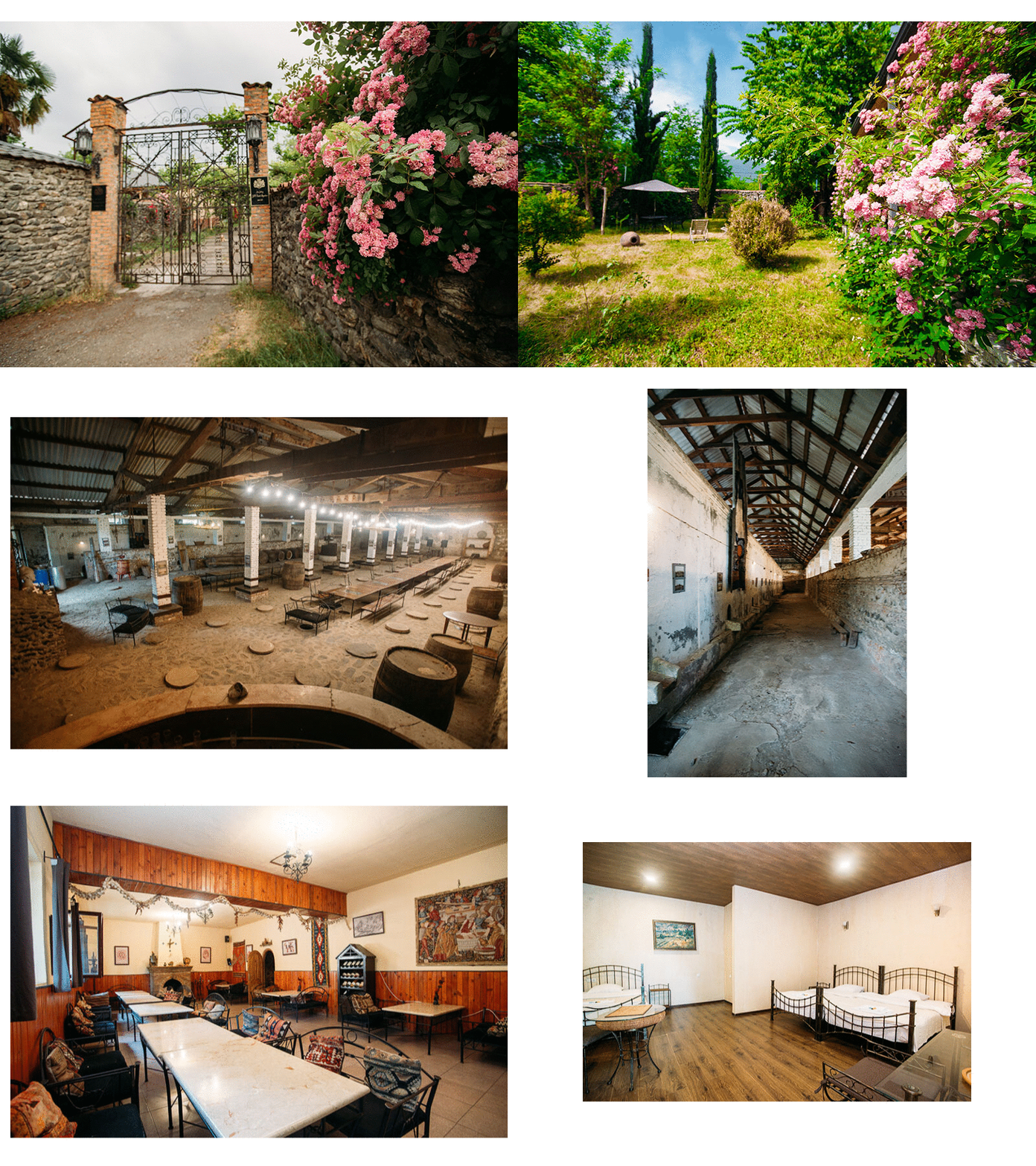
Hotel Chateau Eniseli Bagrationi
Cristina Bersanelli