
BERLIN: Tosca – Giacomo Puccini, 25 October 2026
Tosca
Giacomo Puccini
Opera in three acts
Libretto by Luigi Illica and Giuseppe Giacosa, based on Victorien Sardou’s play La Tosca
Musical direction: Alexander Soddy
Stage direction: Alvis Hermanis
Set and costumes: Kristīne Jurjāne
Lighting: Gleb Filshtinsky
- Floria Tosca: Aleksandra Kurzak
- Mario Cavaradossi: Benjamin Bernheim
- Baron Scarpia: Davide Luciano
- Cesare Angelotti: Arttu Kataja
- Sacristan: Manuel Winckhler
- Spoletta: Florian Hoffmann
- Sciarrone: Temur Bidzishvili
- Kerkermeister: Irakli Pkhaladze
Staatskapelle Berlin
Staatsopernchor
Kinderchor der Staatsoper
Puccini’s Tosca runs like a countdown to an execution at dawn, propelled by Scarpia’s obsession, Cavaradossi’s idealism and Tosca’s love. At Berlin’s Staatsoper Unter den Linden, Alvis Hermanis’s production, first presented in 2014, relocates the action to around 1900, within a comparatively restrained scenic framework.
Against a large grey wall stands an architectural structure designed by Kristīne Jurjāne, framed by classical columns and divided into two levels. The interiors below provide the setting for the action, while a large framed screen above displays images associated with the opera’s locations. In the first act, a reproduction of Hugues Merle’s Mary Magdalene in the Cave accompanies the church setting; in the second, the exterior of Palazzo Farnese appears above Scarpia’s apartment; and in the third, Castel Sant’Angelo overlooks the final act.
The structure occupies the front portion of the stage, leaving much of its depth unused. The interiors and furnishings are fairly conventional, while Jurjāne’s period costumes, though appropriate to the setting, make little impression of their own. One notable change comes during the Te Deum, when the architectural structure moves out of sight, revealing a back wall decorated with large, fresco-like images and opening the stage to the chorus. The expanded space lends the scene a greater sense of scale and visual presence. The images displayed on the upper screen remain static, apart from the portrait of Mary Magdalene, which gradually moves closer, perhaps to draw attention to her eyes. However, the movement becomes a slight distraction, pulling you away from the action below.

In the final scene, Tosca does not leap from Castel Sant’Angelo but steps forward as the stage darkens, leaving her alone in the light. The idea is clear, but the image itself does not quite achieve the dramatic force of the moment.
The scenic arrangement appears to have been conceived around the screen and the changing illustrated narrative originally presented on it, depicting the events in Rome in 1800 alongside the action set a century later. Without the development of this illustrated narrative, the arrangement itself becomes less convincing, leaving the overall visual impression rather modest.
From the pit, Alexander Soddy leads the Staatskapelle Berlin with energy, intensity and momentum, keeping the countdown to dawn taut from the first bars. The orchestra responds with a rich, vibrant sound,bringing out both the dramatic tension and lyrical tenderness of the drama. Soddy maintains a close connection with the singers, achieving a fine balance between pit and stage.
On stage, Tosca, Cavaradossi and Scarpia each believe they can steer events, yet every choice they make brings the end closer.
Aleksandra Kurzak’s Tosca can sweep you off your feet. Impulsive and devoted, she blows through the opera like the wind, sometimes turbulent, sometimes as gentle as a breeze, changing direction without warning. She moves across the stage with ease and confidence, commanding attention from her first “Mario! Mario!” Her emotions are rarely concealed, her reactions arriving almost before she has time to think. Her exchanges with Cavaradossi move between affection, playful jealousy and sudden flashes of anger. Even her insistence that he give the woman in his painting dark eyes is endearing, revealing a Tosca whose possessiveness has something innocent about it. That innocence remains in her first encounters with Scarpia, as though she cannot quite grasp his motives.
As Scarpia’s intentions become clear, Kurzak moves through disbelief, fear and growing desperation. Then, in “Vissi d’arte,” the wind drops. There is complete stillness as she turns inward, creating an intensely personal moment that seems to suspend time. Her finely controlled pianissimi and the delicacy of her phrasing lend the aria a rare intimacy. When she kills Scarpia, the act feels almost instinctive, born of terror and the need to escape. The horror that follows is equally convincing, as though Tosca herself can scarcely comprehend what she has done. Yet despite everything, she returns to Cavaradossi with tenderness and the hope that they might still escape together. When that hope is crushed, her last cry of despair is devastating.
Kurzak’s voice has warmth and richness, while her high notes shine with brilliance and considerable dramatic power. She spins long lyrical lines with remarkable ease, colouring them with tenderness or urgency to reflect Tosca’s changing emotions. Across her vocal range, she combines an evenness of tone with a striking expressive freedom, giving each phrase its own emotional character. Above all, her singing and acting are seamlessly connected, every shift in Tosca’s emotional state finding immediate expression in both.
Benjamin Bernheim brings elegance and intelligence to Cavaradossi, the painter and idealist, with a commanding stage presence and a natural nobility. In the first act, when Tosca visits him in the church, his exchanges with Kurzak are warm and affectionate, though he cannot quite hide his impatience for her to leave. Bernheim balances the two convincingly: every reassurance is sincere, yet his mind is on the fugitive hiding in the chapel. In his confrontation with Scarpia, his indignation and commitment to his principles are evident, as is his disappointment when Tosca gives Angelotti away. Even as his anger rises, his defiance retains the poise that characterises his Cavaradossi. In the final act, he brings a deeper sense of sorrow to the character, his tenderness towards Tosca now touched by the pain of a man who has been unable to protect the woman he loves.
Vocally, Bernheim combines a warm timbre with a bright, focused sheen. His singing has a lyrical elegance, with beautifully sustained lines and a secure upper register in which the high notes bloom freely and carry through the theatre. His “Recondita armonia” unfolds with grace and an effortless flow, while his “Vittoria!” rings out with power. In “E lucevan le stelle,” the sensitivity of his phrasing brings a heartfelt sadness to Cavaradossi’s final reflections.
It is a coherent Cavaradossi, consistent in voice and character from the first act to the last. At times, though, one longs for greater expressive shading and a stronger emotional impulse to give his interpretation more dramatic immediacy.
Davide Luciano plays Scarpia with quiet self-assurance, as a man who seems thoroughly pleased with himself and accustomed to being obeyed and to having his way. There is a polish to his manner that makes his authority more subtle than sheer force. His obsession with Tosca is unmistakable, yet Luciano reveals something beyond the desire to possess her. In the Te Deum, a longing shows beneath his determination, as though he wants not only to have Tosca but also to be wanted by her. Something of this remains in their encounters, where his attempts to draw her towards him coexist with the harshness of his demands. During “Vissi d’arte,” however, that insistence briefly subsides. He sits with his head lowered, almost motionless, as though giving Tosca the moment entirely to herself.

Luciano’s dark, richly resonant baritone brings fullness and authority to Scarpia. His voice remains firm across the range, and he sings with a smoothness and control that give his phrasing a refined ease. In his exchanges with Tosca, the growing insistence of his delivery conveys the character’s determination, yet the singing never loses the polish that marks his portrayal.
Around the central trio, a strong ensemble complements the drama. In the opening act, Manuel Winckhler brings a grounded, well-sung quality to the Sacristan, anchoring the everyday life of the church, while Arttu Kataja’s firm-voiced Angelotti introduces a note of urgency and political danger.
As the drama moves into Scarpia’s sphere of influence, Florian Hoffmann offers a vividly drawn Spoletta, revealing the character’s servile fear in the visible unease with which he delivers unwelcome news to his master. Alongside him, Temur Bidzishvili brings a composed presence and clear, assured singing to Sciarrone, embodying the quiet, disciplined obedience that makes Scarpia’s regime so evident. In the final act, Irakli Pkhaladze brings a convincing vocal delivery to the Jailer, setting a solemn tone for Cavaradossi’s final hours.
The Staatsopernchor and the children’s chorus make an assured contribution throughout the performance. The children’s clear, well-projected voices bring freshness to their appearances, while the adult chorus sings with a rich, unified sound, maintaining musical precision and a strong sense of ensemble.
Catrine N.Andro
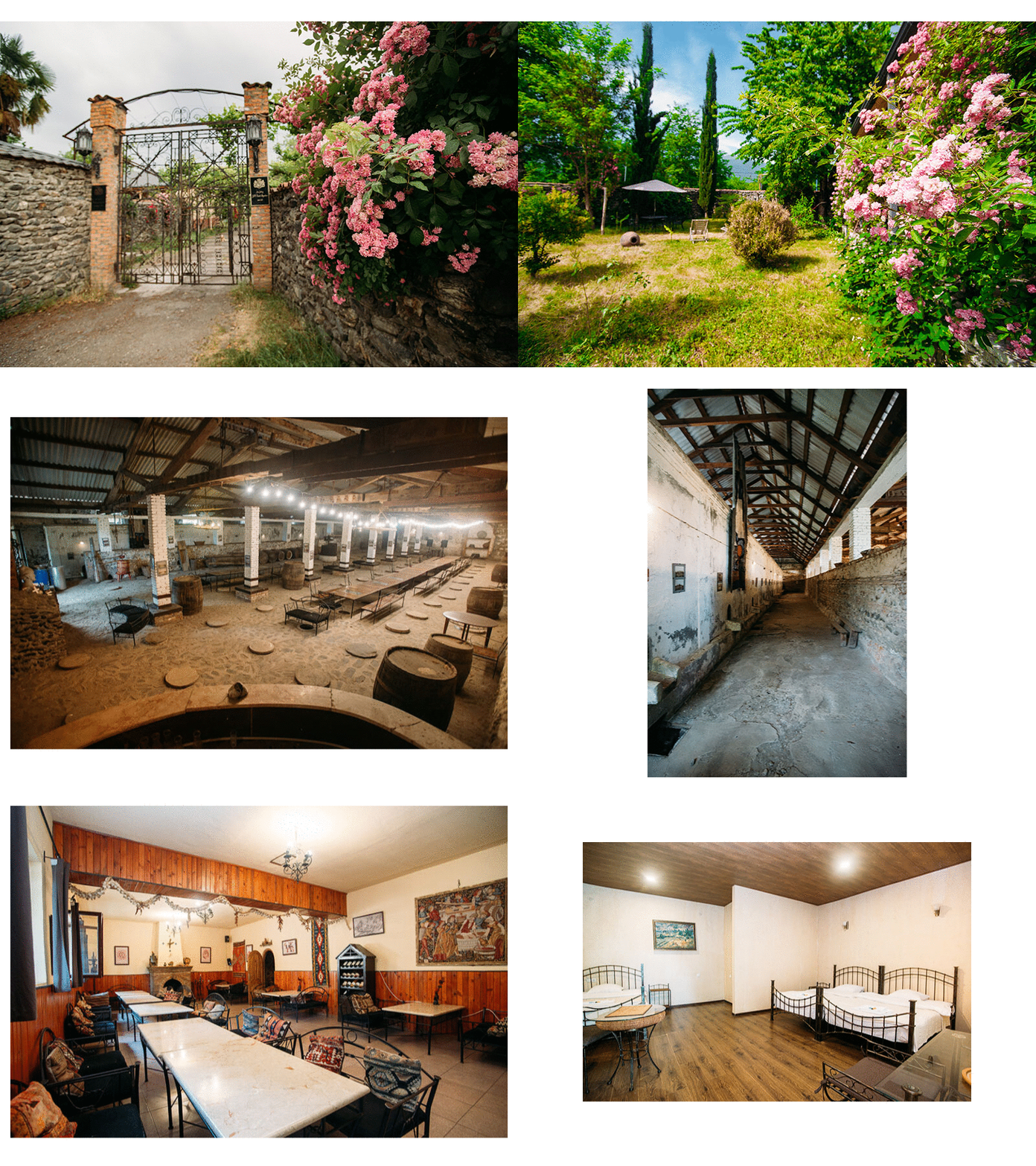
Hotel Chateau Eniseli Bagrationi
Cristina Bersanelli