
Piotr Beczała on Voice, the Power of Choice and the Roads Not Taken
There is a difference between reaching the great opera stages and building a career that can last on them. Beyond the richness of its colours and expression, Piotr Beczała’s singing, together with his stage presence, has always given me a sense of strength, balance and stability, like a monumental work of architecture, beautifully proportioned and rising to extraordinary heights. During our conversation, I began to understand how closely that impression reflected his approach to his art: foundations laid brick by brick through years of experience, carefully considered choices and the willingness to embrace unexpected opportunities.
In one of the rehearsal rooms of the Teatro Real, overlooking Madrid, he took me on a journey from a boy with little interest in opera to a young tenor saving his touring allowance to reach his next masterclass, and eventually to an artist performing on the world’s leading opera stages. Along the way, we explored the complexities of vocal technique, the great singers of the past, the challenges of interpreting a character, and even what Ferrari and Lamborghini might have in common with opera.
What struck me was how all that strength and stability came with such lightness. He laughs easily at his own mistakes, speaks of his colleagues with admiration and moves effortlessly between serious reflection and humour.
Piotr Beczała’s path to opera began almost by accident. As a boy, he had little interest in opera, or even in music more generally. A scout who played a little guitar, he also sang in the school choir, where being one of only two boys made the experience more embarrassing than inspiring. “I did everything so that they would throw me out,” he admits with a laugh. Hardly the beginnings of an aspiring opera singer.
It was only years later, at around eighteen, that singing returned to his life. An audition for a choir led to his acceptance as a tenor, although even his voice classification was uncertain. From there, he progressed through different ensembles, eventually joining a smaller, semi-professional choir where he had to learn to read music and master the fundamentals usually taught in music school. Gradually, he discovered the possibilities of his voice, and singing became a genuine passion.
His education, however, was moving in another direction. Having studied technical subjects, he was expected by his father to pursue engineering. Singing remained a hobby until the conductor of the ensemble suggested that he audition for the music academy.
photo©Bertie Watson
With only nine months to prepare for the entrance examination at a highly competitive music academy, and almost no formal musical training, the prospect seemed unrealistic. He began private lessons in solfège and music theory, learning virtually from scratch. He did not even know any opera arias and remembers singing Polish Christmas carols for the vocal professor during his audition. He applied both to the music academy in Katowice and to a university for technical studies. The academy examination came first, and when he was accepted, it effectively determined the direction his life would take. The result surprised his family, where nobody had any connection to opera or professional singing. Even now, a little of that surprise seems to remain.
“I’m a Capricorn,” he says with characteristic humour. “When I start something, I have to finish it.” What had begun almost by chance was now becoming a conscious choice, one he was determined to see through.
When an opportunity arose to attend his first masterclass in Lenk, Switzerland, Beczała had to find a way to finance the journey from Poland. He joined the Katowice Philharmonic on a concert tour of France, singing in the chorus and serving as cover for the tenor soloist in Mozart’s Requiem and Bach’s Magnificat, performed over eighteen concerts.
He was ready to replace the soloist if necessary, but “of course, he never got sick!” he recalls with amusement. The musicians received a daily allowance of around twenty dollars, and Beczała saved as much as possible for his journey to Switzerland. “I ate nothing for three weeks,” he recalls with a laugh. “From today’s perspective, it’s impossible. The world looks completely different.”
At a masterclass in Switzerland, he encountered Sena Jurinac, who would become an important influence during those formative years. After hearing him sing, she invited him to another course, where she could select one student for a full scholarship. She chose Beczała, an opportunity of particular importance to a young tenor facing financial difficulties.
Jurinac also changed the direction of his vocal development. At the academy, Beczała had been classified as a dramatic tenor while still in his early twenties, despite having considerable difficulty with his upper register. “No Puccini,” Jurinac told him. “You have to sing Mozart.”
For the young Beczała, that was hardly an exciting prospect. “Mozart was no fun for me. It was much more fun to sing E lucevan le stelle,” he recalls. Yet he trusted Jurinac and began working with her on Il mio tesoro. The process was far from comfortable. “I was almost breaking my voice. Terrible time,” he remembers. But the results came relatively quickly, offering him an early lesson in the difference between what he wanted to sing and what his voice needed.
Through international masterclasses, Beczała discovered how the operatic profession worked. Fellow students from France, Austria and Italy introduced him to the system of agencies and auditions, explaining how singers could secure engagements at opera houses. Competitions offered another route, although they required money for travel and preparation. Beczała knew the subject well, having devoted his diploma thesis to the influence of vocal competitions on young singers’ careers.
In his final year of studies, he decided to put this knowledge into practice. Together with four colleagues, he set off in a small car from Poland to Vienna and Munich, hoping to attract the attention of an agency. One successful audition opened the possibility of further auditions at opera houses in Austria and Switzerland. But finances remained an obstacle, and he could afford only the journey to Linz.
After seven hours on the road, he arrived at the opera house at one o’clock, with his audition scheduled for two. There was barely time to drink some water and warm up in the restroom before stepping onto the stage. The gamble paid off: he was offered a three-year contract. He had also auditioned in Brno and Bratislava, but Linz represented something different. It offered him an entry into the Western European operatic world, an important step for a young singer setting out from Poland.
“And this is how it all started. I remember every step till now,” he says with a smile.
photo©Bertie Watson
Linz may have been a relatively small opera house, but Beczała remembers it with great affection. The musical standards were high, the orchestra excellent and, most importantly for a young singer, there was room to grow. He sang everything from smaller parts to Ferrando in Mozart’s Così fan tutte, gradually expanding his repertoire. Some roles, he admits, came too early. In his second year, he was already singing Werther, a role too demanding for a tenor whose technique was still developing. But Linz gave him the freedom to experiment and make mistakes in an environment where the consequences were very different from those on the world’s leading opera stages.
At the time, he had never even dreamed of singing at the world’s leading opera houses. He was happy with his contract, his repertoire and the feeling that the theatre needed him as its leading tenor. He and his wife had married in 1992, and life in Linz offered a certain stability, even if the money was modest. “No money, but who cares? Young people don’t care about money,” he adds with a laugh. His wife, herself a singer, had been offered an opportunity at La Scala after winning a competition marking Rossini’s 250th anniversary, but she gave it up to join him in Linz. “From a business point of view, it was not a very wise decision,” Beczała says, laughing. “But we are still together.”
As his experience grew, so did his desire to explore new opportunities. Guest appearances followed in Brussels and Geneva, and eventually Linz began to feel too small. Then, in 1996, an important opportunity came his way.
He was rehearsing Belmonte in Mozart’s Die Entführung aus dem Serail when he received a call from an agent. Zürich urgently needed a Rinuccio for Gianni Schicchi. The agent had heard Beczała sing the role some months earlier and had already assured the theatre that he was ready. The leap from Linz to Zürich seemed almost unimaginable at the time.
Beczała accepted. He finished his rehearsal, collected the suitcase his wife had packed and flew to Zürich. There was barely time to prepare: just enough to watch a video of the staging, exchange a few words with the conductor and step onto an unfamiliar stage.
As he was preparing to go on stage, there was a knock on his dressing-room door. Only two weeks earlier, Beczała had watched the Italian baritone Giorgio Zancanaro in a La Scala broadcast on Polish television. Now Zancanaro was standing in front of him. “Scusi… You are the new tenor? Good luck!” Beczała recalls, imitating Zancanaro’s voice as he tells the story. “Canta bene, domani contratto!” Sing well today, contract tomorrow.
And remarkably, events unfolded just as Zancanaro had predicted. The following morning, as Beczała was already on his way back to Linz, the agent received a call from Alexander Pereira, then director of the Zürich Opera. The theatre wanted to offer him a three-year contract.
“This kind of opportunity, you have to take it,” Beczała recalls. Moving between Mozart and Puccini, with scarcely any time to prepare, had been a considerable risk, but one that opened an entirely new chapter in his career.
The story, however, did not end with Zürich. Some of his fellow tenors in Linz reacted to the news with a touch of jealousy. Zürich was certainly impressive, they told him, but Vienna was even more prestigious and much closer. Of course, he had no chance of getting into the Vienna State Opera, they added. Amusingly enough, just two weeks later, Beczała received an invitation to replace a tenor in Bruckner’s Te Deum, a work he knew well from Linz. After an audition for Ioan Holender, director of the Vienna State Opera, he was offered another three-year contract.
Suddenly, Beczała had two offers from two of Europe’s leading opera houses. But he had already given Alexander Pereira his word, even though he had not formally signed the Zürich contract.
For Beczała, keeping his word mattered more than financial considerations. Moreover, Zürich had promised him a leading role in a new production during his very first season, an opportunity not usually available to newcomers in Vienna. “It’s about building a career,” he says. His decision was not particularly well received. Holender did not speak to him for seven years, Beczała recalls with a laugh. But, as a Capricorn, he was prepared to accept the consequences of his choice.
Prestige alone, he explains, is not enough. A single appearance at a major theatre may look impressive, but its real value depends on what it leads to. “You can have one night at La Scala,” he says. “But you have to know whether it brings you something, or whether it is just one night at La Scala.”
It is a perspective he now tries to pass on to younger singers. An artist should prepare not only for the repertoire immediately ahead, but also for what will be needed in two, three or four years, while considering where they want to be five or six years from now. This requires a clear sense of direction, but also an acceptance that no one can be everywhere at once. There is little point in envying a colleague performing at La Scala or the Metropolitan Opera while you are engaged elsewhere, because later you will be singing on that stage, and vice versa. “Opera is not a competition. We can coexist and flourish. I would welcome even more singers. You can’t be jealous. Be happy!” he concludes.
For Beczała, what matters ultimately is what artists bring to the audience. “We are artists and we make great operas. But to be honest, what we do is entertainment on a very high level. But entertainment. We make people happy. That’s my job.” Each time he steps on stage, his aim is to sing as well as he can, fully inhabit the character and draw the audience into the excitement and energy of the performance. When he achieves that, he is satisfied.
As forward-looking as Beczała is in his approach to his own career, he is also a great admirer of the singers of the past. He spends hours listening to their recordings. Yet his admiration is not uncritical. “Believe me, not everybody was perfect,” he remarks.
Beczała hesitates to single out one name. It depends on the opera, the repertoire and the period of a singer’s career.
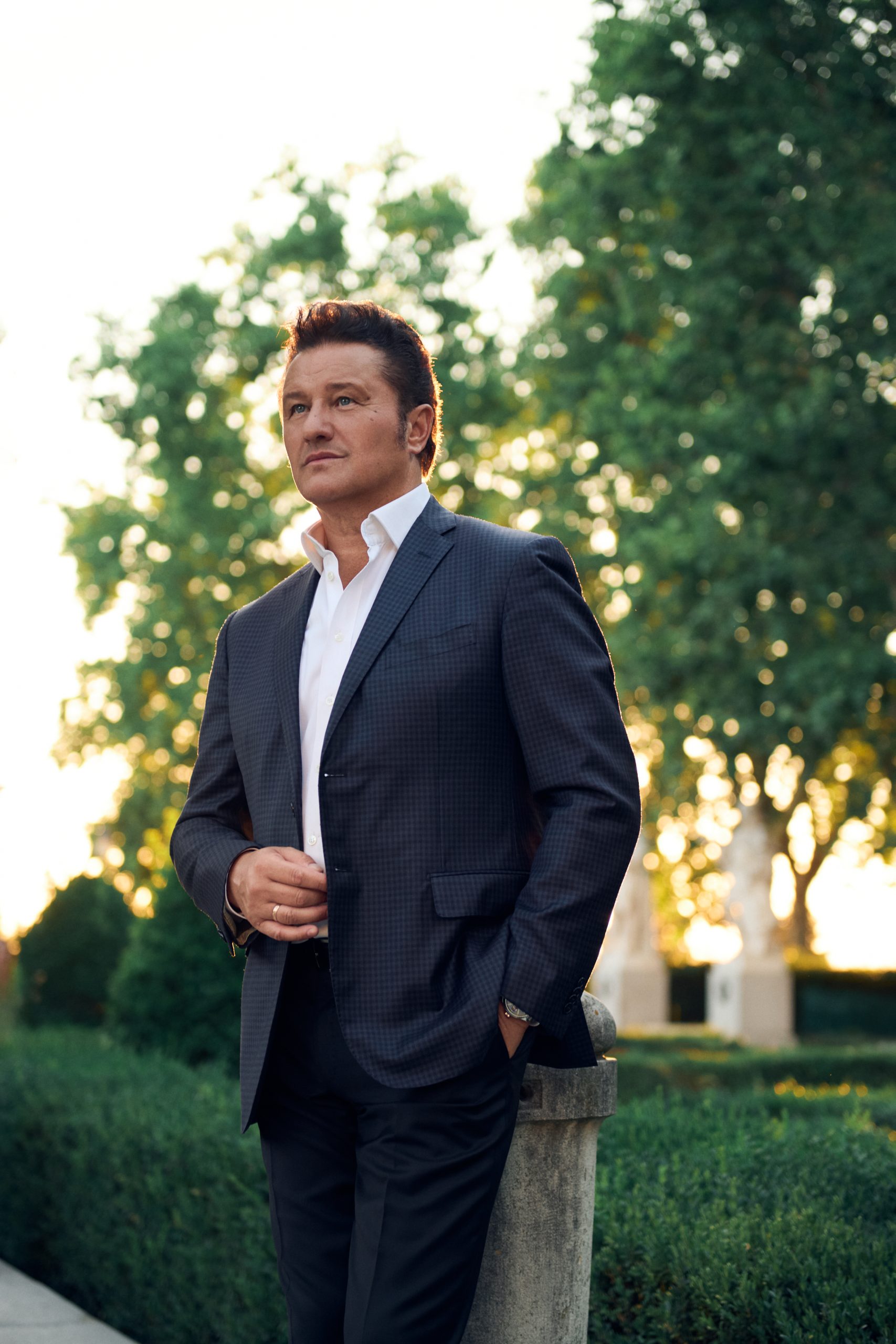
photo©Bertie Watson
Giuseppe Di Stefano is one of the example Beczała often discusses with young tenors. He admires his exceptionally beautiful voice, acting ability and passion, particularly in his early lyrical repertoire. Yet Di Stefano’s move towards heavier dramatic roles exposed the limitations of his open vowels, so effective in lyrical music but increasingly problematic under dramatic pressure. A singer might survive a shorter role such as Canio in Pagliacci, Beczała suggests, but the physical cost can be considerable. Even if such a performance has a powerful impact on the audience, “our job is not to die at every performance,” he says.
Canio, Cavaradossi or Andrea Chénier knows nothing of the technical difficulties written into his music. The singer must convey the character’s emotions while protecting the voice. That, for Beczała, is the purpose of technique. “You have to change your voice, your technique, or you have to avoid this repertoire,” he adds.
Then comes Luciano Pavarotti, for whom his admiration is considerable, although not without reservations. “Vocally, perfect. No question.” Pavarotti, he explains, approached very different roles through essentially the same technical principles. His Duke of Mantua, Nemorino and Radamès remained unmistakably Pavarotti, reflecting his belief in technically correct singing. He was reluctant to modify that approach even for verismo. “It was his artistic choice, and certainly a healthy one for his voice. He was Pavarotti. Who am I to question?” Beczała acknowledges with humour.
Yet Beczała, having performed across bel canto, Verdi, Puccini and Slavic repertoire himself, sees the demands of these musical traditions differently. “The vocal adjustments you need to make when moving from one repertoire to another are really significant,” he explains.
Verismo, in particular, requires what he describes as “something more, some more courage” in the use of the voice, a more immediate, physical intensity that he calls “organised screaming”. For Beczała, verismo is not bel canto, although he acknowledges that perhaps ten per cent of even the heaviest verismo repertoire retains elements of it. Nevertheless, as he explains, “you still have to sing and produce the voice in the verismo way, allowing a different kind of dramatic expression.”
Even Verdi’s heaviest roles, he argues, remain rooted in bel canto. Il trovatore, Un ballo in maschera and even Otello are built upon its principles of vocal production and projection, whereas verismo calls for a different approach. “Singers with great success in verismo do not really think much about technique,” he adds. “They are landing in verismo because it’s easier.”
Commenting on the endless comparisons between Pavarotti, Franco Corelli and Mario Del Monaco, Beczała offers an analogy: comparing them is like comparing an Aston Martin with a Lamborghini. Both have powerful engines and can reach extraordinary speeds, but that hardly makes them the same machine.
He regards Corelli as one of the finest technicians within his particular dramatic vocal world. Corelli also ventured into bel canto, including Bellini’s Il pirata, although his enormous instrument was not easily contained within more delicate repertoire. There was a certain wildness to his singing, an occasional irregularity of phrasing that suited verismo exceptionally well, even if it could create difficulties elsewhere.
Del Monaco represents another extraordinary phenomenon. “The voice is divine,” Beczała says, although he feels that the pursuit of sheer power sometimes came at the expense of other musical possibilities. During his student years, he remembers being surprised by a beautifully executed piano passage in a recording of La forza del destino. Del Monaco was clearly capable of considerable softness, even if he generally favoured a more forceful approach.
Beczała also mentions Aureliano Pertile, one of Arturo Toscanini’s favourite tenors, whom he considers particularly instructive for young singers. Following Caruso’s death, Pertile took on the dramatic repertoire associated with him, while Beniamino Gigli covered the lyrical roles. Pertile’s voice, Beczała observes, may not have possessed Caruso’s natural beauty, but his phrasing and the way he used such a powerful instrument were extraordinary.
Each great singer of the past has something distinctive to teach, Beczała reflects. He admires the technical command of French tenors Georges Thill and Alain Vanzo. And since we are in Madrid, he speaks with particular enthusiasm about Miguel Fleta, praising the Spanish tenor’s extraordinary voice and remarkable control of its colours and dynamics.
His curiosity extends further back, to singers whose voices have barely survived on record. Beczała wonders how the Polish tenor Jean de Reszke and his brother Édouard really sounded, recalling that Jean was so dissatisfied with an early recording that he had it destroyed. At the Metropolitan Opera, Beczała experienced the limitations of early recording technology himself when he recorded two arias on wax cylinders alongside a soprano. Despite their singing, the sound was scratchy and distorted, offering some insight into why singers of that era struggled to recognise their own voices in recordings.
For Beczała, listening to historical singers means understanding their artistry rather than imitating it. This is why he avoids demonstrating passages during masterclasses: every singer must find their own solutions, shaped by their voice, physique and temperament. Studying another singer’s phrasing and colours should inspire, not dictate, interpretation. Yet artistic freedom must respect the composer’s intentions. Beczała recalls a thought attributed to Herbert von Karajan: the finest interpretation follows what the composer has written, enriched by musicality. A singer should neither prolong a high note simply because the voice feels good nor rush a passage when the evening proves difficult. Musical freedom requires discipline.
That same attention to interpretation extends to the way Beczała approaches his operatic characters. “Of course, we have a score, so our freedom is limited compared to an actor. But still, we can change the emotions. We can use the voice in a very different way,” he explains. When preparing a new role, he begins not with the music, but with the text. Much like an actor, he tries to understand the character’s life before the opera begins, the circumstances that shaped him and the motivations behind his actions.
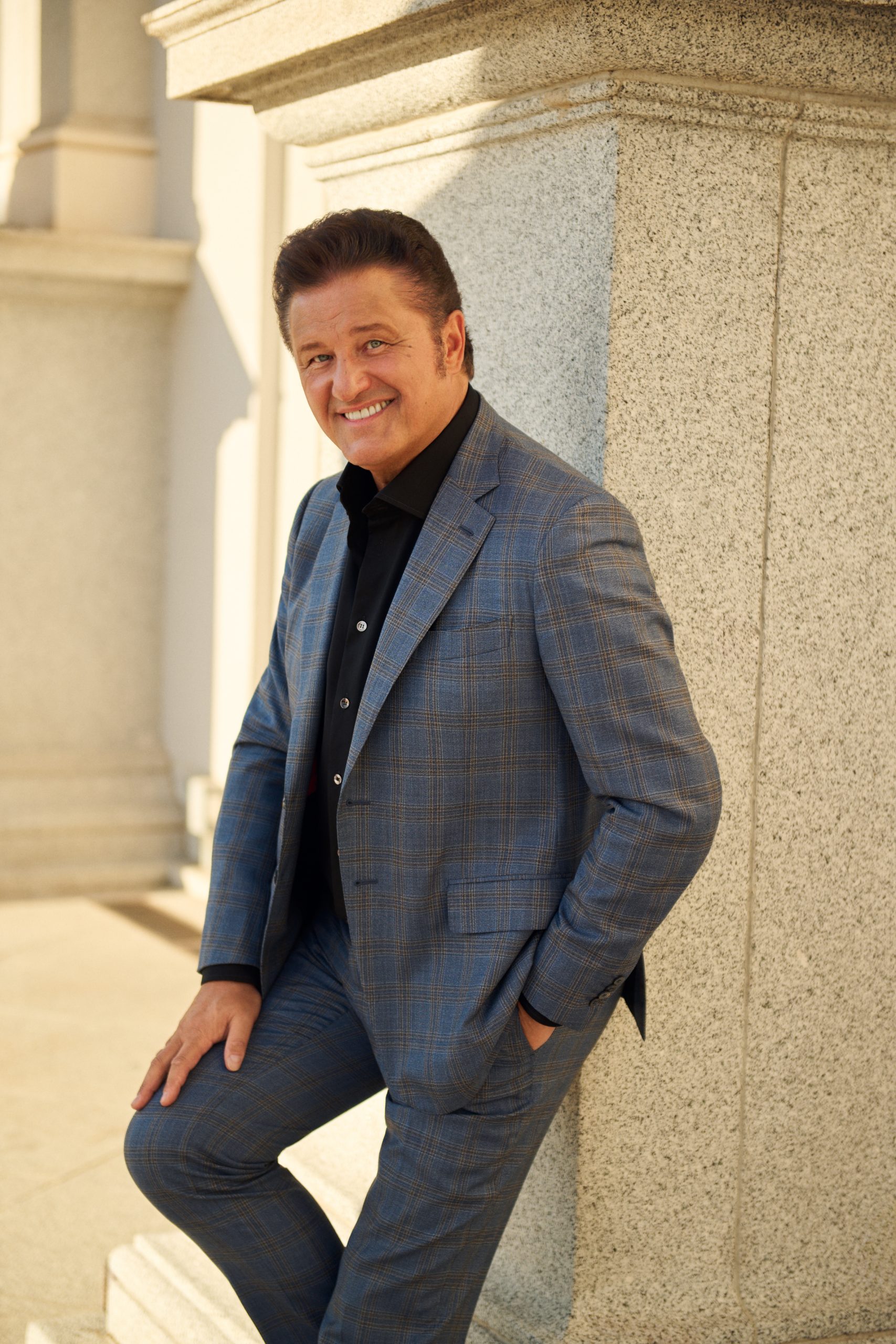
photo©Bertie Watson
Cavaradossi in Tosca is one example. What was he doing before we first meet him? How deeply was he involved in the political events surrounding him? These questions help Beczała understand the decisions the character makes later, sometimes within only a minute or two of music. Without that background, he argues, an interpretation risks becoming unconvincing.
He is particularly drawn to roles rooted in great literature, such as Werther, Faust and Roméo. Understanding the original work allows him to explore aspects of a character that may not be immediately apparent in the opera. With Otello, he believes it is essential to return to Shakespeare and consider what it meant for a Moor to attain such a position of power, and how those circumstances shaped his character and suffering. Werther, too, is more complicated than a sensitive young man suffering from unrequited love. His artistic temperament also makes him egocentric and, at times, unfair to Charlotte.
Beczała resists dividing characters neatly into good and bad. Even the Duke of Mantua in Rigoletto, he suggests, cannot be reduced to a simple villain, while Rigoletto himself may be morally more troubling in certain respects. Such complexity is part of the genius of the composers and librettists, and the performer’s responsibility is to discover what lies beneath the surface. When a director’s approach limits that exploration, Beczała is prepared to defend his interpretation. “Sometimes you have to fight for your character. And I do it.”
His preparation also takes him beyond the rehearsal room. When studying Lohengrin, he visited Neuschwanstein Castle, absorbing its unusual atmosphere. For Roméo et Juliette, he travelled to Verona, “even though the balcony is not real,” he adds with amusement. And while preparing Des Grieux in Manon, he visited Saint-Sulpice in Paris, exploring the church and the space behind its altar.
These experiences connect him with the character, even when the eventual staging bears little resemblance to the historical or literary setting.
Does he still get nervous before stepping onto the stage? “Sometimes,” Beczała admits. But what he usually experiences is less nervousness than a heightened level of concentration. The transformation begins in his dressing room, while warming up, putting on makeup and getting into costume. Gradually, he becomes the character he is about to portray. When he sings Manrico, for example, he is not nervous because Manrico is not nervous. And if the character is nervous, that emotion becomes part of the performance. Real anxiety arises only when he is not feeling well, perhaps with a cold or an unexpected vocal problem.
Yet becoming the character does not mean losing oneself in the role. For Beczała, a performer who becomes completely overwhelmed by the character’s emotions is no longer acting professionally. Losing control might work for five minutes, he argues, but cannot be sustained throughout an entire evening. The skill lies in creating a convincing portrayal while remaining in command of the performance, something he associates with the approaches of actors such as Anthony Hopkins and Al Pacino.
He draws a distinction between excitement and hysteria. A performer can experience enormous intensity but must retain, as he puts it, a few “strings to pull back”. He also recalls an observation by pianist Krystian Zimerman about the delicate balance between conscious control and spontaneity. What feels extraordinary to a musician during a concert may sound less convincing on a recording, while a performance in which everything is perfectly controlled can come across as cold. For Beczała, finding the right balance between conscious technique and emotional freedom is essential.
The same principle applies to characterisation. Carmen, for example, cannot be reduced to a promiscuous woman, an interpretation Beczała considers cheap and unconvincing. Don Giovanni, too, requires an understanding of the character’s psychology rather than exaggerated behaviour.
Nemorino, by contrast, a role Beczała has never performed, belongs to a different dramatic world. His essential naivety should not be burdened with excessive psychological complexity. “You can’t put too much drama in Nemorino. It’s not there.”
With such a varied repertoire, I wonder whether there is one role he would choose above all others.
Beczała finds it difficult to choose. Gustavo in Un ballo in maschera is particularly dear to him, with the character’s many dimensions making the opera especially rewarding for a tenor. Lohengrin is another favourite, and he disagrees with those who consider the character one-dimensional. He also considers Otello one of the most complex operatic characters. Although he has never performed the role, he does not rule it out in the future, adding with characteristic humour that “you have to be sure it doesn’t kill you.”
For the past ten or fifteen years, he explains, he has had the freedom to choose roles he genuinely wants to sing, considering both his voice and his artistic interests, rather than following someone else’s expectations.
There are, however, roles for which he has little enthusiasm. Hoffmann is one of them, a character he has no desire to portray. For Beczała, Hoffmann is a rather strange, unsuccessful figure who ends much as he began, despite his extraordinary experiences along the way. He sees Hoffmann more as a companion to the three female protagonists than a central figure.
Hermann in Tchaikovsky’s The Queen of Spades inspires a similar reaction. Although many Russian tenors consider the role an important challenge, Beczała finds the character too dark and psychologically unappealing, despite the beauty of Tchaikovsky’s music.
Even the title role in Don Carlo, an opera he considers a masterpiece, does not appeal to him. In his view, the historical Don Carlo was a deeply unpleasant figure, and Verdi’s musical characterisation reflects his weakness. He jokes that a tenor can spend hours singing the part and still emerge at the curtain call wondering whether the audience remembers who Don Carlo actually was.
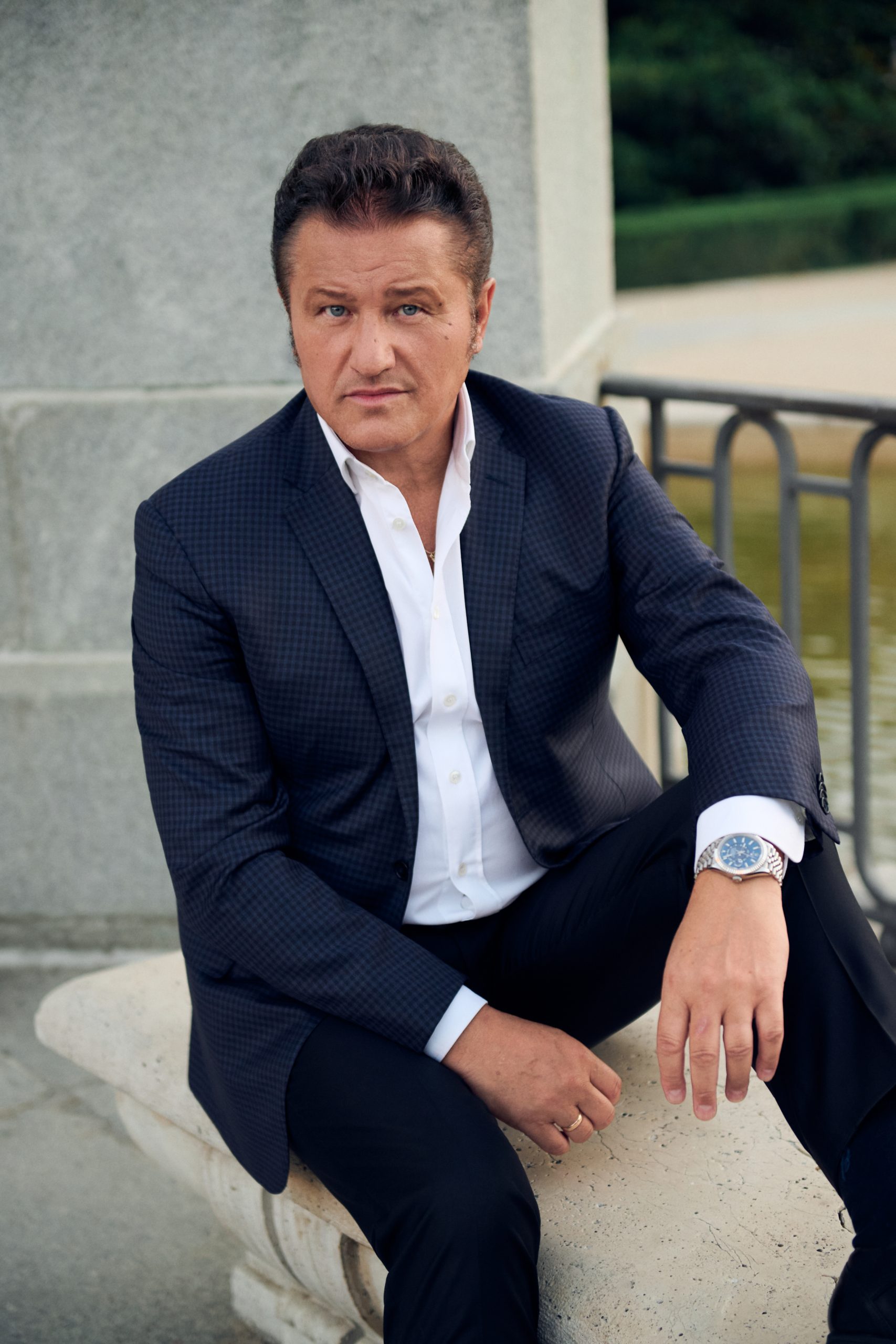
photo©Bertie Watson
And which soprano role would Beczała choose to portray? After a moment’s thought, he names Tosca, whom he finds particularly interesting for her commanding personality and central role in the drama. Everything revolves around her, he says, adding with a smile that this is much like the opera world itself, where everything revolves around sopranos.
From there, our discussion briefly returns to the question of good and bad characters. Perhaps, he concedes, there really are some thoroughly bad people in opera. Iago comes to mind, followed by Scarpia and Spoletta. The last name reminds him of an episode from his early years in Linz. He had initially been assigned Spoletta in a production of Tosca, but after four weeks of rehearsals, the role was given to a colleague. The reason, he recalls with a laugh, was that he was simply too nice. He could not make himself sufficiently unpleasant for the character.
Over the course of a career, some characters become remarkably familiar. Beczała estimates that he has performed Lensky and the Duke in Rigoletto somewhere between 140 and 200 times each. Yet every return brings something new, shaped by different colleagues, productions and his own evolving experience.
Even the practical challenges change. He remembers once struggling with the long interval before Gustavo’s final aria in Un ballo in maschera, feeling the need to warm up again. After performing Lohengrin, however, with its much longer stretches away from the stage, that interval no longer seemed particularly daunting. Experience had taught him how to remain ready without starting his preparation all over again.
His experience with Lohengrin also leads us to Wagner, a composer whose music Beczała appreciates, although he admits that he still does not know his works well enough to name him as his favourite composer.
Christian Thielemann spent seven years trying to convince him to sing Lohengrin. For a long time, Beczała resisted, uncertain whether Wagner was the direction he wanted his career to take. He had never considered himself a Wagnerian tenor. Eventually, he agreed, and the experience proved rewarding. Lohengrin helped him discover new vocal colours and gave him greater confidence in exploring this repertoire.
Now another Wagnerian challenge awaits him: Parsifal. He finds the work unusual, particularly its immense duration compared with the relatively limited amount of music the title character actually sings. Unlike roles built around clearly defined arias, Parsifal’s music often unfolds through extended declamation and long musical lines. What interests him most, however, is the character’s transformation. Parsifal begins as an innocent, seemingly foolish young man and gradually develops into someone mature, conscious of his responsibilities and certain of his purpose. Beczała is already considering how to communicate that transformation through the words and music, although he admits that he has yet to discover all the possibilities of the role.
While Wagner represents a relatively recent discovery in Beczała’s artistic journey, Verdi has long held a special place in his repertoire. What he particularly admires is the composer’s extraordinary ability to create theatrical tension through music. Even seemingly straightforward rhythms and accompaniments serve a dramatic purpose, driving the action forward.
Puccini offers a different musical world. Unlike Verdi’s more clearly defined forms, his music allows the drama to unfold in a continuous flow, with fewer conventional divisions between arias and the surrounding action. Beczała considers this a more modern musical language, although certain aspects of Puccini’s writing still strike him as unusual.
He is equally enthusiastic about Slavic composers, particularly Tchaikovsky, whose musical language he admires through his experiences singing Lensky in Eugene Onegin and performing in Iolanta. Dvořák also holds a special place in his estimation, especially for the complexity and richness of his harmonic writing. We also briefly touch on Rossini, whose operas Beczała has never performed, although he admires the composer’s extraordinary facility.
Our conversation turns to one of the most debated subjects in opera today: the role of stage directors and the increasingly unconventional productions appearing on the world’s leading stages.
Beczała has strong opinions on the subject, although he makes it clear that he is not opposed to modern staging. What concerns him is the growing dominance of the director’s concept over the music, the story and the performers. Some directors, he observes, speak of saving opera while, in his view, risking damage to the very art form they claim to defend.
To explain what he means, Beczała turns once again to cars, a subject he clearly enjoys. A great car requires a powerful engine, a good gearbox, suspension, an interior and someone capable of driving it. All these components must work together. Yet he feels that in some contemporary opera productions, the equivalent of the paint shop has taken control of the entire manufacturing process. Suddenly, the colour matters more than the engineering. A Ferrari may be red, a British racing car green and a Lamborghini yellow, but painting a Fiat Tipo in Lamborghini yellow will never make it a Lamborghini.
Costumes are another subject on which Beczała has considerable experience. His mother was a tailor, and he grew up understanding fabrics, proportions and construction. That background can make him particularly demanding during fittings, especially when a costume restricts movement or breathing. “It’s not like a catwalk” he says.
Yet he has no objection to jeans, contemporary clothing or minimalist designs when they make sense. Roméo, for example, could perfectly well appear in shorts, while Gustavo in Un ballo in maschera presents different dramatic requirements. He appreciates David McVicar’s attention to historical detail, where costumes, movement and behaviour contribute to the theatrical experience. “I like to work with professionals.”
His concerns also extend to the balance of power between directors and performers. He recalls a warning from a renowned Wagnerian bass-baritone: a singer who repeatedly performs badly risks losing engagements, while a director may continue receiving prestigious invitations despite a succession of unsuccessful productions. Beczała believes the same standards of professional responsibility should apply to both. Younger singers, he fears, are particularly vulnerable when they disagree with a director’s concept.
Despite these frustrations, he prefers discussion to confrontation. He has declined some productions, but generally tries to find common ground with directors, even when their initial concepts seem difficult to realise.
He recalls a production of Un ballo in maschera in Zürich whose original staging presented serious challenges. With Nello Santi conducting, certain proposals simply could not work. Beczała spent three days discussing the concept with the director, searching for a solution that respected the musical and theatrical demands of the opera. Eventually, they found one. He remembers the production with affection, although he admits, laughing, that even after two revivals there are still scenes whose meaning escapes him.
The most important question is not whether opera should be modern or traditional, but whether the singer believes in what is happening on stage. “When I’m not convinced about what I’m doing, how can you be convinced?” he asks. One phrase from directors particularly irritates him: “Trust me. It will be fantastic.” Trust, he believes, must be supported by understanding and preparation, not simply demanded.
For Beczała, when singing, acting and music come together, drawing the audience into the drama, something special is created. But when a production is so burdened with symbolism that audiences must study the programme booklet simply to understand what is happening, that connection can be lost. Fortunately, he adds, such experiences remain the exception.
He is equally willing to acknowledge productions where collaboration succeeds. He speaks warmly of a recent Lohengrin in Baden-Baden, where he worked with a director he already knew and respected. Their discussions began well before rehearsals, and he appreciated the director’s musical knowledge and determination to connect the staging with Wagner’s score. The result was a production he genuinely liked.
Ultimately, what Beczała wants is a collaboration in which the music, the story, the staging and the performers support one another rather than compete for attention.
As our conversation turns to conductors, Beczała describes himself as belonging to the old school and speaks with particular affection of Nello Santi, with whom he worked on several new productions in Zürich. For Beczała, Santi’s understanding of singing and his ability to guide a performer towards the best possible musical result were exceptional.
He feels a similar connection with Christian Thielemann, particularly in Wagner. Beczała admires not only his command of the repertoire but also the experience behind it. Thielemann worked as a répétiteur and assistant, gradually developing his craft through different stages of the profession.
Beczała is less convinced by the tendency to elevate very young conductors rapidly to prestigious opera houses. Some succeed, he acknowledges, but conducting large-scale opera requires years of practical experience. Leading a small ensemble is very different from coordinating an orchestra, chorus and soloists numbering well over a hundred musicians. “I love people conducting with passion, and who know what to do with the hands” he adds.
One memorable example comes from Luisa Miller, which begins close to bel canto and gradually approaches the dramatic intensity of Otello. In the final scene, Rodolfo’s first words are sung offstage, and conductor Bertrand de Billy encouraged Beczała to use a vocal colour so different that the audience would not immediately recognise his voice. Beczała loved the idea. He recalls similar advice from his teacher when preparing Faust: to reflect the character’s age through his singing rather than focus on vocal beauty, allowing youthful brilliance to emerge only after the transformation.
Such guidance is particularly valuable to him, but he also recognises that some conductors can have considerable egos, something he regards with a degree of humour as almost part of the profession. The problem begins when personality outweighs musical ability. Conductors and singers need not agree on every detail, but they must understand what they are trying to achieve together.
Beczała places equal importance on collaboration with fellow singers, guided by two principles: “It’s about two things. It’s respect and quality. When you do quality work and you respect people around you, it works.” For him, professionalism matters more than personal sympathies. When singers understand their roles and work towards the same dramatic result, they can collaborate successfully without being particularly close outside the theatre.
Experience also makes a difference. With a familiar partner, he knows what to expect, particularly when something unexpected happens during a performance. He recalls a singer with whom he performed Carmen in Vienna, a wonderful artist who nevertheless had a remarkable tendency to lose her sense of direction backstage. During the final scene, as Carmen ran towards Don José, Beczała sometimes had to indicate with his eyes which way she should go. Otherwise, there was an equal chance she would run in the wrong direction. Such moments are part of live theatre, and familiar colleagues make them easier to navigate.
Over more than three decades on stage, he has experienced some extraordinary artistic partnerships. Among Beczała’s most memorable artistic partnerships is his long collaboration with Anna Netrebko, whom he first met in a 2005 production of Rigoletto at Covent Garden. Their frequent performances together developed a special connection. “We really had some kind of chemistry on stage, which doesn’t happen every day,” he recalls.
He speaks equally warmly of Sonya Yoncheva, whom he considers an exceptionally professional colleague, and of his recent performances of Carmen with Aigul Akhmetshina. He appreciates the younger generation of singers, joking that he is now old enough to be the father of some of his soprano and mezzo-soprano partners.
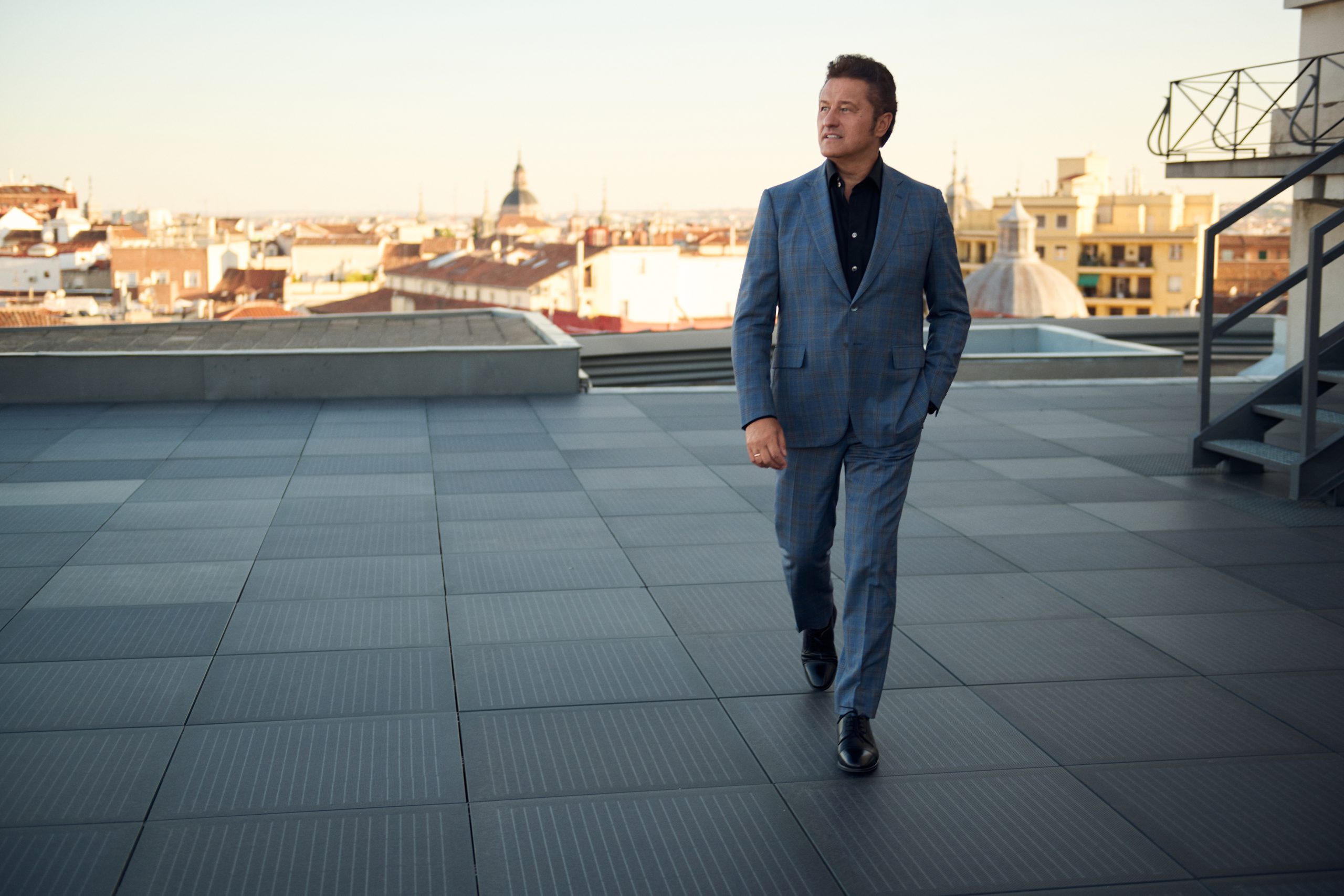
photo©Bertie Watson
Beczała believes the greatest results emerge when artists contribute to a shared performance rather than compete for individual attention. “You can’t be selfish on the stage,” he says. “Together we are stronger.” The combined effect, he explains, can be extraordinary, almost like an atomic explosion.
For all the artistic satisfaction the profession has brought him, life as an opera singer comes with its own difficulties. When asked about the greatest challenge of his career, Beczała answers without hesitation: “Travelling.”
The constant movement between cities and countries can be exhausting. He and his wife have been travelling together for months, their car packed with belongings as they move from one engagement to another. He wonders what the value of a beautiful house is when one is rarely there to enjoy it. For colleagues with children, the complications can be even greater, with school schedules and family life adding another layer of difficulty. Nor is the practical side always predictable. Renting an apartment for a production might mean discovering that the neighbouring building is under construction, with noise continuing throughout the day.
Artistically, however, the challenge is finding the right balance between new roles, the number of performances and the variety of repertoire across a season. He recalls realising that he had signed contracts to sing Lohengrin in three opera houses, amounting to 22 performances in a single year. Everything went well, but looking back, he considers it a mistake. Wagner had come to represent around 35 per cent of his season.
The problem was not that he found Lohengrin too demanding, but that singing so much Wagner left less room for other repertoire, languages, vocal colours and technical possibilities. He needs these different demands to keep his voice flexible.
Even after decades of experience, he remains willing to question his own decisions and learn from them. Yet there is also a clear sense of contentment in the way Beczała looks back on the career he has built through hard work, determination and a firm commitment to the foundations he laid along the way. Above all, his passion for singing and the excitement of stepping onto the stage shape the way he looks towards what lies ahead.
Catrine N.Andro
Hotel Chateau Eniseli Bagrationi
Cristina Bersanelli