
MADRID: Roméo et Juliette – Charles Gounod, 30 May 2026
Roméo et Juliette
Charles Gounod
Opera in five acts
Libretto by Jules Barbier and Michel Carré, after William Shakespeare’s play Romeo and Juliet (1597)
Premiered at Théâtre Lyriyque (Paris) on 27 April 1867
Premiered at Teatro Real on 19 November 1873
New production of the Teatro Real, in co-production with Opéra national de Paris
Musical Director: Carlo Rizzi
Stage Director: Thomas Jolly
Set Design: Bruno de Lavenère
Costume Design: Sylvette Dequest
Lighting Design: Antoine Travert
Choreography: Josépha Madoki
Chorus Conductor: José Luis Basso
Cast
- Juliette: Nadine Sierra
- Roméo: Javier Camarena
- Frère Laurent: Roberto Tagliavini
- Mercutio: Benjamin Appl
- Stéphano: Héloïse Mas
- Capulet: Laurent Naouri
- Tybalt: Maciej Kwasnikowski
- Gertrude: Sonia Ganassi
- Le Duc de Vérone: David Lagares
- Pâris: Tomeu Bibiloni
- Grégorio: Josep-Ramón Olivé
- Benvolio: Pablo Martínez
- Frère Jean: Javier Castañeda
Chorus and Orchestra of Teatro Real
Dancers of the Production
Teatro Real, 30 May 2026
Few stories have captivated audiences across generations and throughout the world as persistently as that of Romeo and Juliet. Returning to Teatro Real after 115 years, Gounod’s Roméo et Juliette receives a visually ambitious new staging by Thomas Jolly that places the intimate tragedy of Verona’s star-crossed lovers within a framework of grand theatrical spectacle.
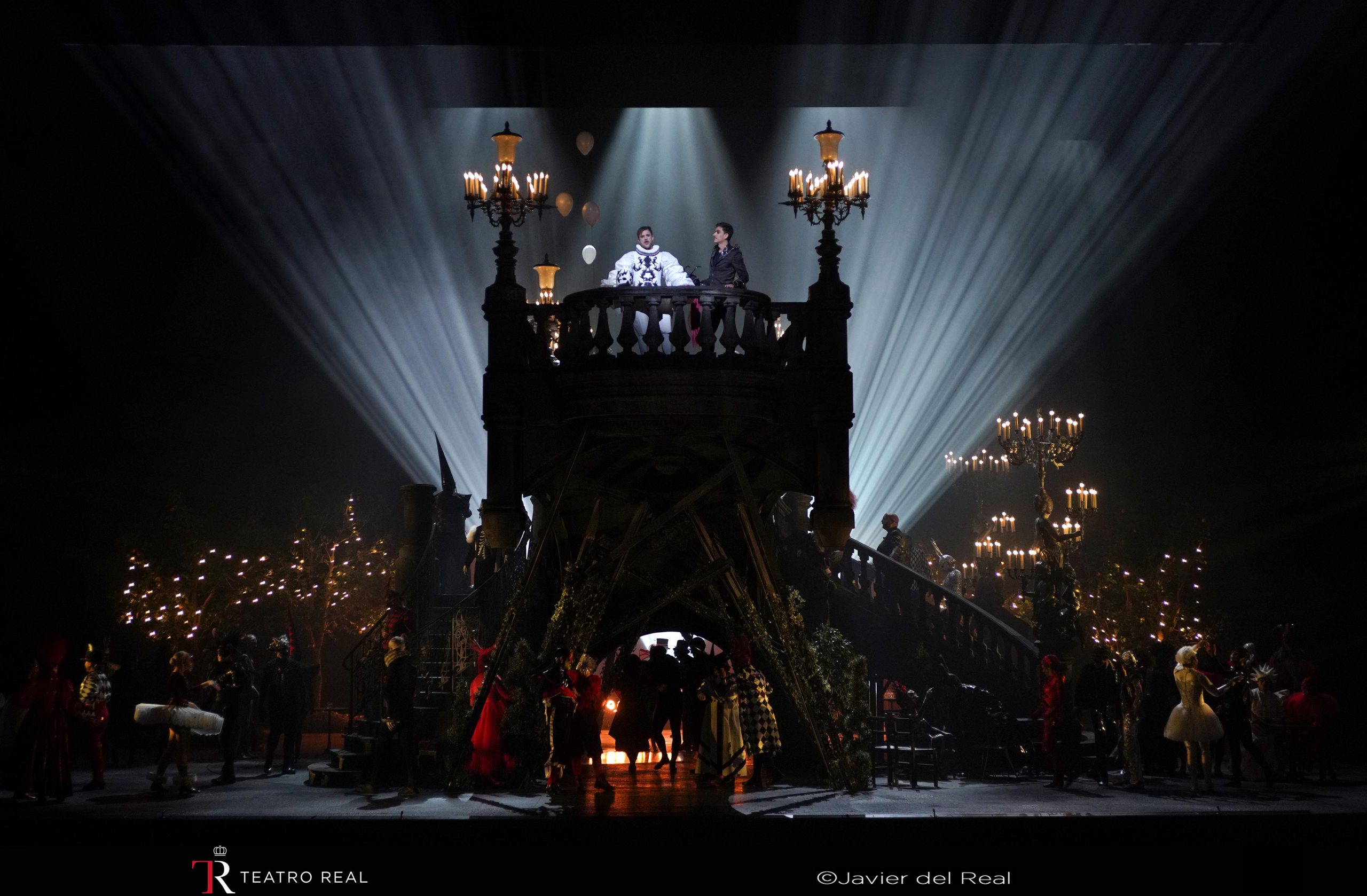
Jolly’s staging is built around a series of recurring oppositions: light and darkness, life and death, celebration and mourning, intimacy and spectacle. These contrasts shape the production’s visual language throughout the evening. Antoine Travert’s lighting becomes a key dramatic tool, continuously redefining space and directing attention, while Sylvette Dequest’s costumes help distinguish both the characters and the world they inhabit. Together, they guide the gradual transition towards the increasingly monochrome atmosphere of the later acts, lending the unfolding tragedy a growing sense of inevitability. The mixture of historical references and more abstract theatrical elements further distances the story from any clearly defined period, giving the tragedy a more universal dimension.
The staging revolves around a monumental rotating staircase with balconies and chandeliers, replicating the grand staircase of the Palais Garnier in Paris. Through its constant motion and shifting light, the structure transforms into a succession of spaces, serving as the production’s principal scenic device. Set against a black void, it appears almost suspended in space, heightening the sense of spectacle.
While the staircase is undeniably beautiful, its imposing grandeur creates moments of genuine theatrical magic, though its scale occasionally feels ambitious for the dimensions of the Teatro Real stage. In the large choral scenes, the number of performers leaves limited space for the visual concept to fully breathe, while chandeliers and stage lights occasionally intrude into the audience’s line of sight. Nevertheless, the staircase provides some of the evening’s most memorable stage images.
Carlo Rizzi leads the Orchestra of Teatro Real with sensitivity and restraint, shaping the score with careful attention to balance and flow. The orchestra delivers a polished performance, attentive to the voices and the lyricism of Gounod’s writing.
As the curtain rises, figures dressed as plague doctors remove bodies from the street beneath shifting light, creating a stark and unsettling opening image. As the staircase rotates, the chorus comes into view in the colourful costumes of the Capulet ball while recounting the tragic fate of the lovers. The contrast between mortality and celebration is striking, immediately establishing one of the production’s central visual tensions. The Chorus of Teatro Real sustains this contrast throughout the evening, their vibrant, tightly unified singing bringing conviction to scenes of celebration, conflict, and mourning.
The presence of plague doctors in the opening scene may also evoke Shakespeare’s original tragedy, where a plague quarantine ultimately prevents Frère Laurent’s message from reaching Roméo. The image likewise lends particular resonance to Mercutio’s famous curse, “A plague o’ both your houses!”, delivered later in the opera. Yet once the festivities begin, the plague imagery largely recedes into the background, and the motif is not developed further, remaining one of the production’s more suggestive visual ideas.
The Capulet ball itself unfolds as a vibrant spectacle of colour, movement, and light. Balloons, fireworks, and energetic choreography create a festive atmosphere far removed from the sombre imagery of the opening scene. Its vivid excess and relentless energy feel closer to temptation than courtly refinement.
Among the figures observing the ball from above are Tybalt and Paris. Dressed in white accented with black ornamentation, Tybalt immediately stands apart from the surrounding crowd. Maciej Kwasnikowski’s vocal intensity and dramatic presence convincingly convey Tybalt’s pride, volatility, and hostility, establishing the character as a persistent source of tension. As Pâris, Tomeu Bibiloni makes a strong impression with confident stage presence and a well-focused vocal line.
Laurent Naouri presents Capulet as a charismatic host, fully at ease amid the spectacle. At times almost flirtatious, he commands the festivities with the confidence of a man firmly in control of his household, while beneath the outward conviviality lies a distinct sense of cold authority. Though not every phrase landed with equal security, his strong dramatic presence and assured characterisation sustained the role convincingly.
A contrasting energy arrives with Romeo and his companions. Javier Camarena’s Romeo emerges kind and somewhat naïve, bringing warmth and youthful idealism to the role. His lyrical tenor, marked by elegant phrasing and sweetness of tone, complements this characterisation from the outset. Mercutio’s Queen Mab aria becomes one of the scene’s more inventive moments, the presence of a dancer and a flowing length of fabric lending the scene an atmosphere of fantasy and illusion. Benjamin Appl combines strong theatrical instincts with a finely controlled vocal line, capturing both the wit and imagination that define Mercutio. Alongside him, Pablo Martínez is an engaging Benvolio, contributing to the joyful spirit surrounding Roméo.
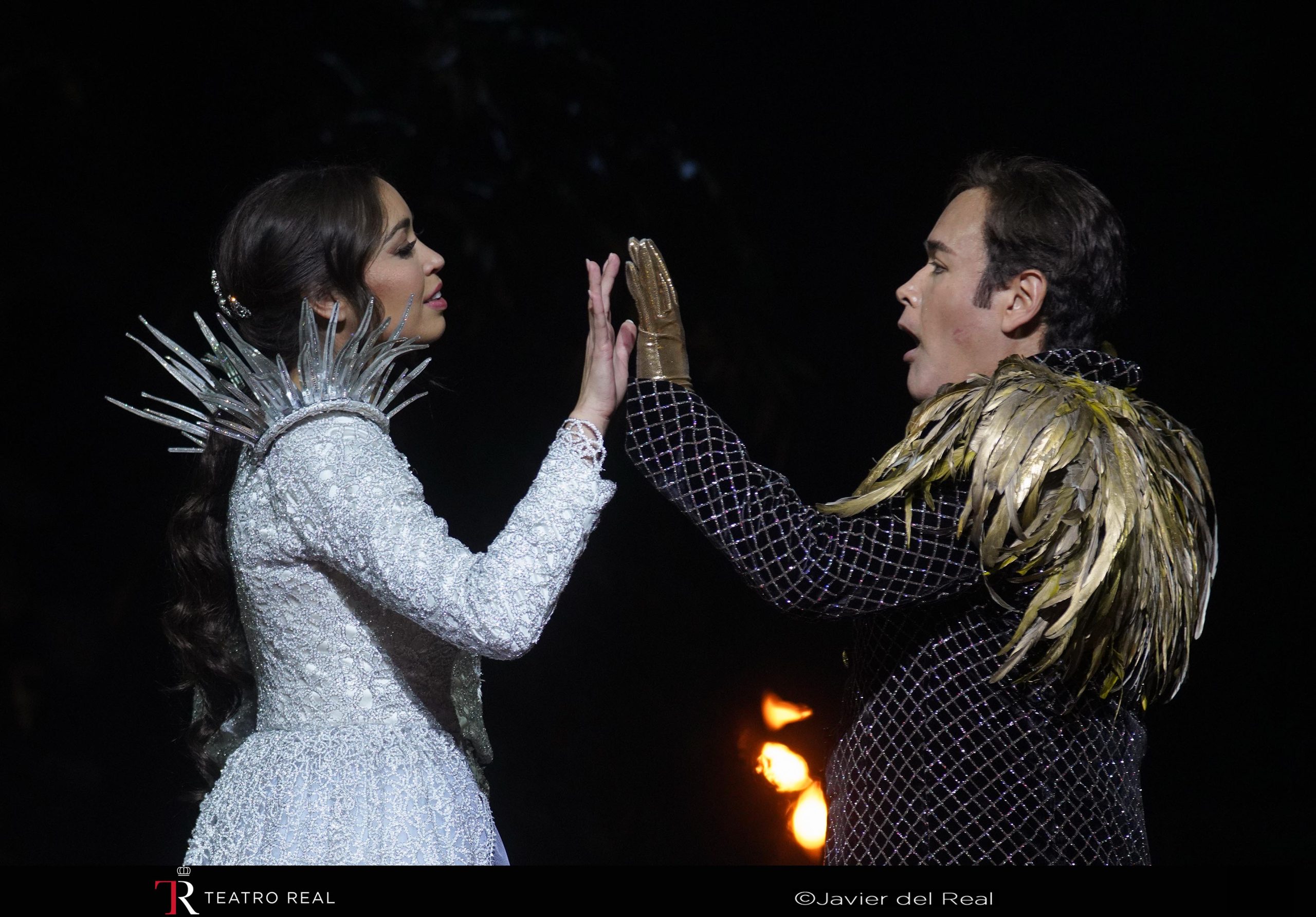
Eager to slip away from the watchful supervision of her nurse Gertrude, Juliette throws herself into the heart of the festivities. Amid the movement and spectacle of the ball, Nadine Sierra appears in a shimmering white costume, radiating youthful energy and independence. Her Juliette embraces the world around her with curiosity and a genuine sense of discovery, qualities that find their fullest expression in Je veux vivre, one of the evening’s vocal highlights. Sierra inhabits the role with remarkable naturalness, making every reaction feel entirely genuine. She brings an infectious sense of joy and spontaneity to the aria. Vocally, she combines brilliance, warmth, power, and remarkable expressive flexibility. Her top notes sparkle effortlessly while softer passages reveal tenderness and vulnerability. The middle register is rich in colour, and transitions between registers are seamless.
As the drama unfolds, Sierra charts Juliette’s emotional development with impressive conviction. The exuberance of the opening scenes gradually gives way to emotional depth and determination, culminating in a deeply affecting poison scene. Throughout the evening, she sustains a portrayal that remains both dramatically compelling and vocally accomplished.
Juliette’s family circle is further enriched by Sonia Ganassi’s Gertrude. Her mezzo-soprano retains an appealing colour, while her attentive stage presence makes Juliette’s nurse a sympathetic and engaging figure.
During Romeo and Juliette’s first encounter, the surrounding activity freezes as the two lock eyes. The choreography contributes effectively to the scene’s visual energy. Yet during Juliette’s revelation of Romeo’s identity, the continued movement of the dancers on the staircase feels somewhat distracting.
The immediate connection between the two protagonists is equally convincing musically. Sierra and Camarena create an instant relationship. While Juliette appears the more confident of the two, Camarena’s Romeo approaches the encounter with touching shyness, as though surprised by the intensity of his own feelings. Vocally, Sierra’s richly resonant soprano and Camarena’s elegant lyric tenor complement one another beautifully, their lines intertwining with ease while preserving the distinct qualities of each voice.
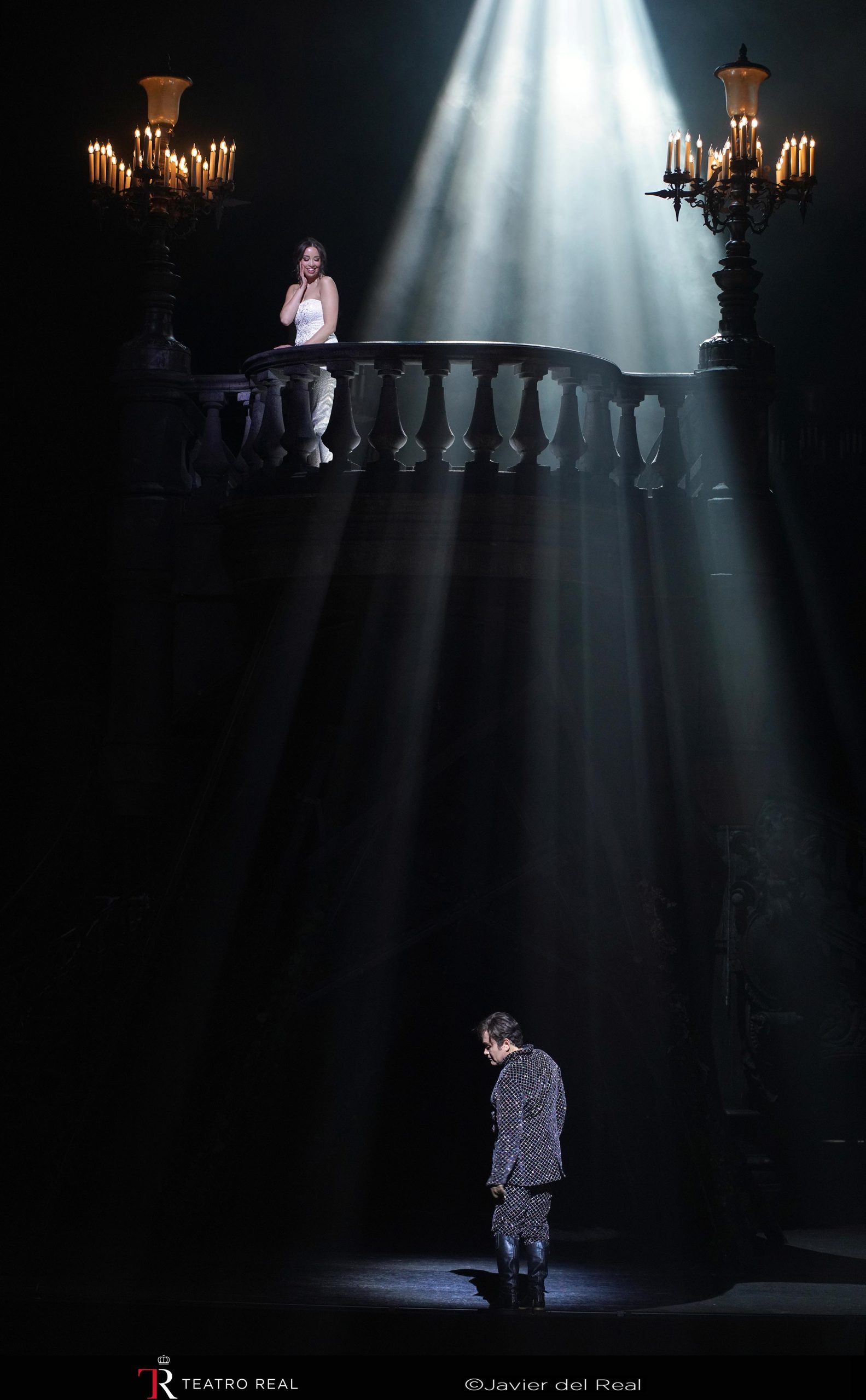
As the bustle of the ball subsides, the action moves to the garden beneath Juliette’s balcony. The revolving set, so often associated with spectacle and movement, here reveals one of the production’s most intimate images. Bathed in light and shadow, the scene acquires an almost dreamlike quality.
Camarena delivers Ah! lève-toi, soleil!, shaping the aria with elegance, tenderness, and refined phrasing. His Romeo remains genuinely sincere, the sweetness of the tone and natural flow of the vocal line lending the aria particular tenderness, while the top notes bring moments of radiant brightness. Reunited with Sierra, the connection established at the ball deepens further as first attraction gives way to a more profound emotional bond.
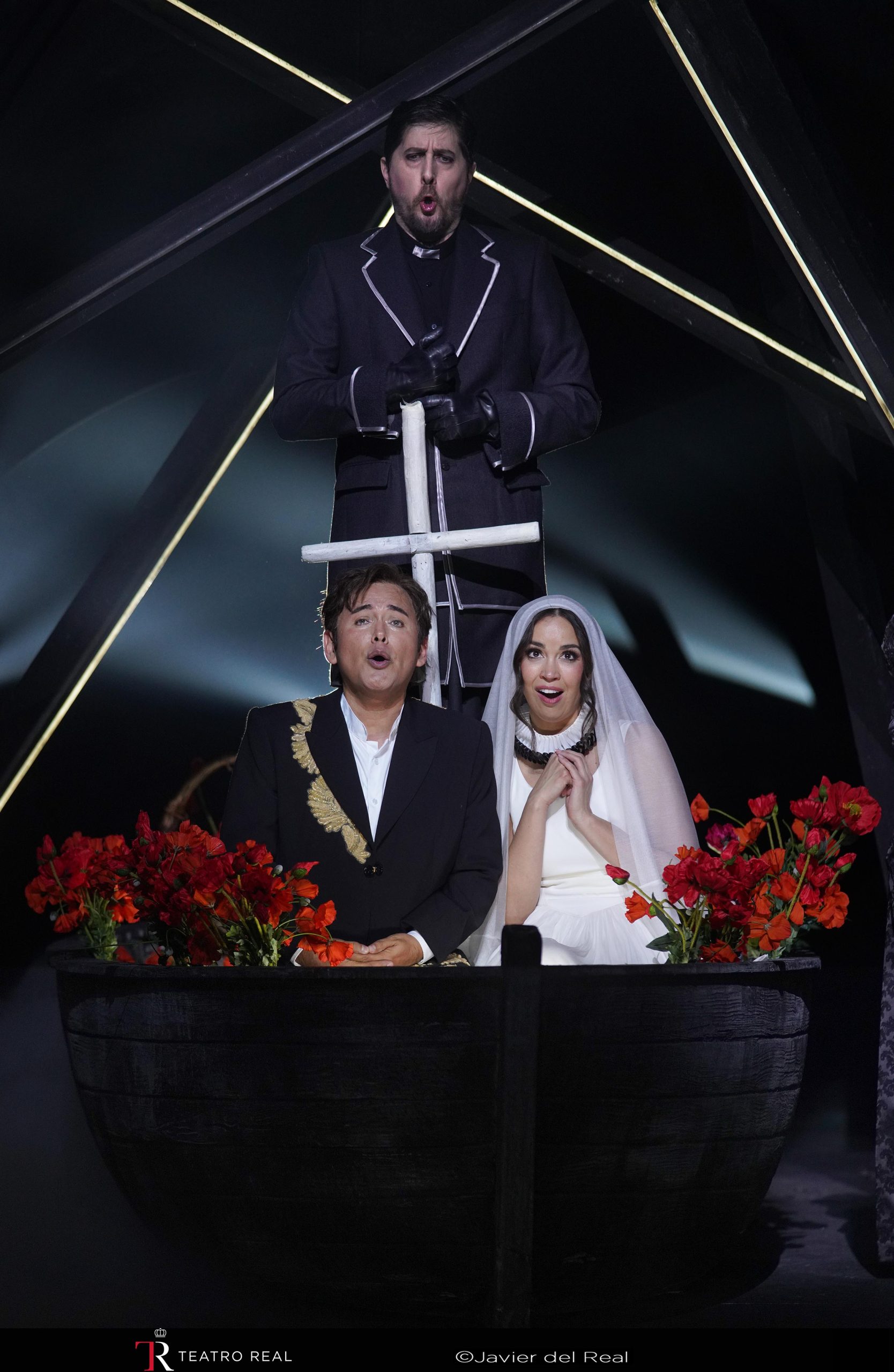
Frère Laurent’s appearance in a flower-filled boat provides one of the production’s more poetic images, lending the scene an atmosphere of calm and reflection amid the surrounding turbulence. With commanding stage presence, Roberto Tagliavini delivers a standout performance, his bass combining depth, tonal richness, and effortless projection. This balance of power and serenity carries into the wedding scene as he guides the lovers through their secret union. His later interactions with Frère Jean acquire a growing sense of urgency, while Javier Castañeda brings vocal clarity and conviction to the role.
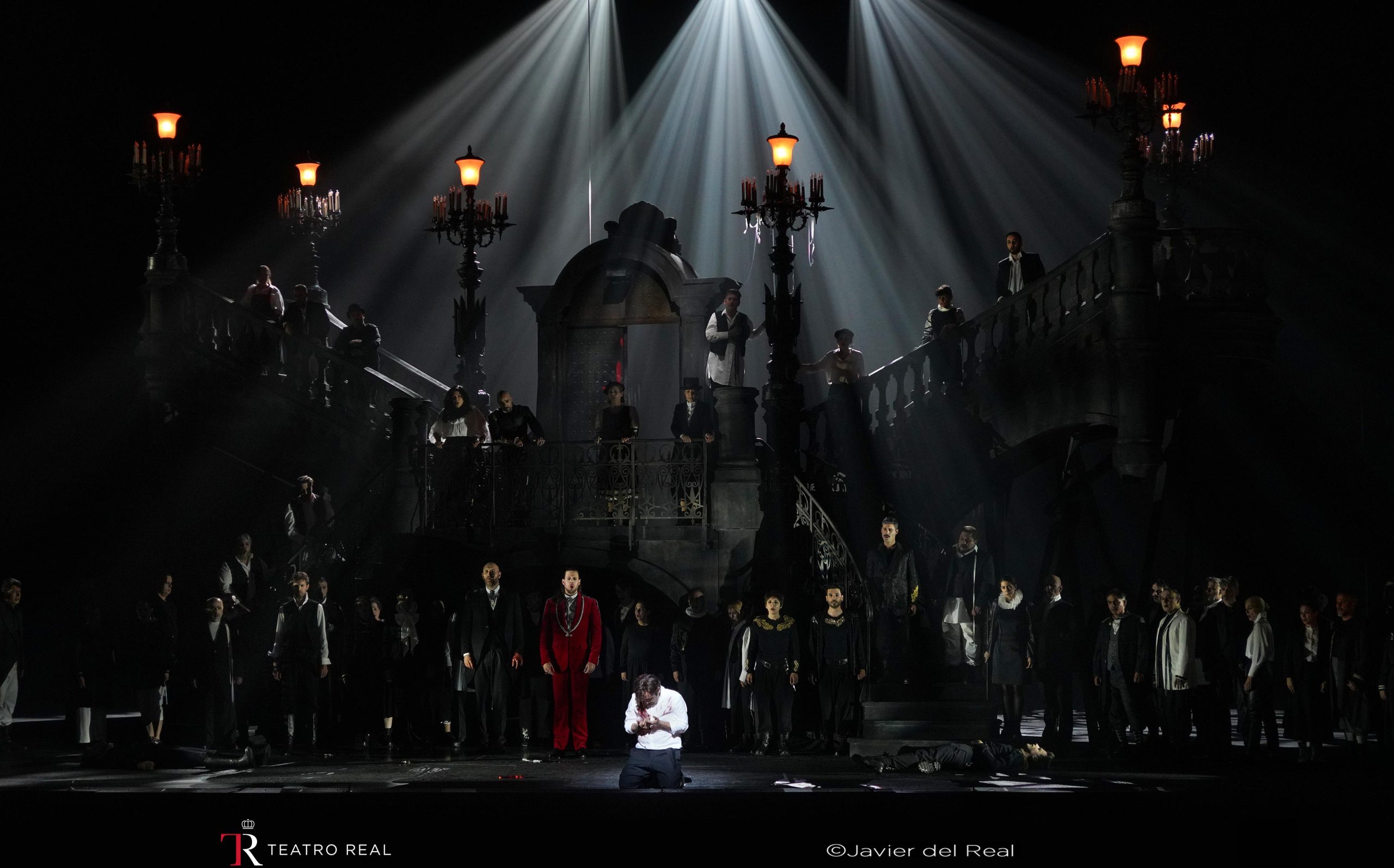
While black and white are present throughout the production, the visual palette gradually becomes more restricted as the drama unfolds. By this stage, monochrome imagery increasingly dominates the scene, creating a more severe atmosphere. Against this reduced palette, isolated bursts of colour acquire greater visual prominence, drawing attention to key dramatic elements such as the Duke, the bloodshed of the duel, and the poison itself. Here, Thomas Jolly’s staging allows the growing conflict to unfold with focus and dramatic purpose.
Before events take a darker turn, Héloïse Mas provides one of the act’s most enjoyable moments in Stéphano’s aria. Playful and spirited, she brings energy to the stage. Her agile singing and effortless command of the vocal line make the aria a welcome moment of lightness before the unfolding tragedy. As Grégorio, Josep-Ramón Olivé contributes an assured vocal presence and a confident stage manner.
The duel scene is staged with clarity and momentum, maintaining tension throughout while remaining compelling both vocally and dramatically. The scene also marks a turning point in Camarena’s portrayal. Until this point, his Romeo has remained notably gentle and reluctant to engage in violence, making his attempts to avoid confrontation entirely believable. Following Mercutio’s death, both the vocal delivery and dramatic characterisation acquire a new intensity. Camarena vividly conveys Romeo’s grief, shock, and growing awareness of the consequences of his actions, while preserving the qualities that have defined the character from the beginning.
As the Duke of Verona, David Lagares combines commanding stage presence with a resonant, powerful voice, bringing considerable authority to one of the opera’s pivotal moments.
The lark duet finds the lovers in a noticeably more restrained setting. With the staircase concealed behind a curtain, the stage is reduced to a simple balcony, shafts of light, and a bed dressed in black linen bearing the initials of the two protagonists. Compared with the production’s more elaborate scenes, the image feels surprisingly plain and lacks some of the visual imagination displayed elsewhere in the evening.
Musically, however, the scene proves deeply rewarding. Sierra and Camarena deliver the duet with remarkable sensitivity, allowing the growing sense of loss and inevitability to emerge from the music. The conviction of their performances ensures that the emotional weight of the scene remains fully intact, regardless of the surrounding staging.
With Romeo banished, Juliette finds herself facing her greatest crisis. It is here that the darker side of Capulet’s authority becomes fully visible. The presentation of the wedding dress and the physical violence directed towards his daughter introduce an unsettling suggestion of domestic abuse, heightening the sense of coercion surrounding the forced marriage and intensifying the dramatic tension.
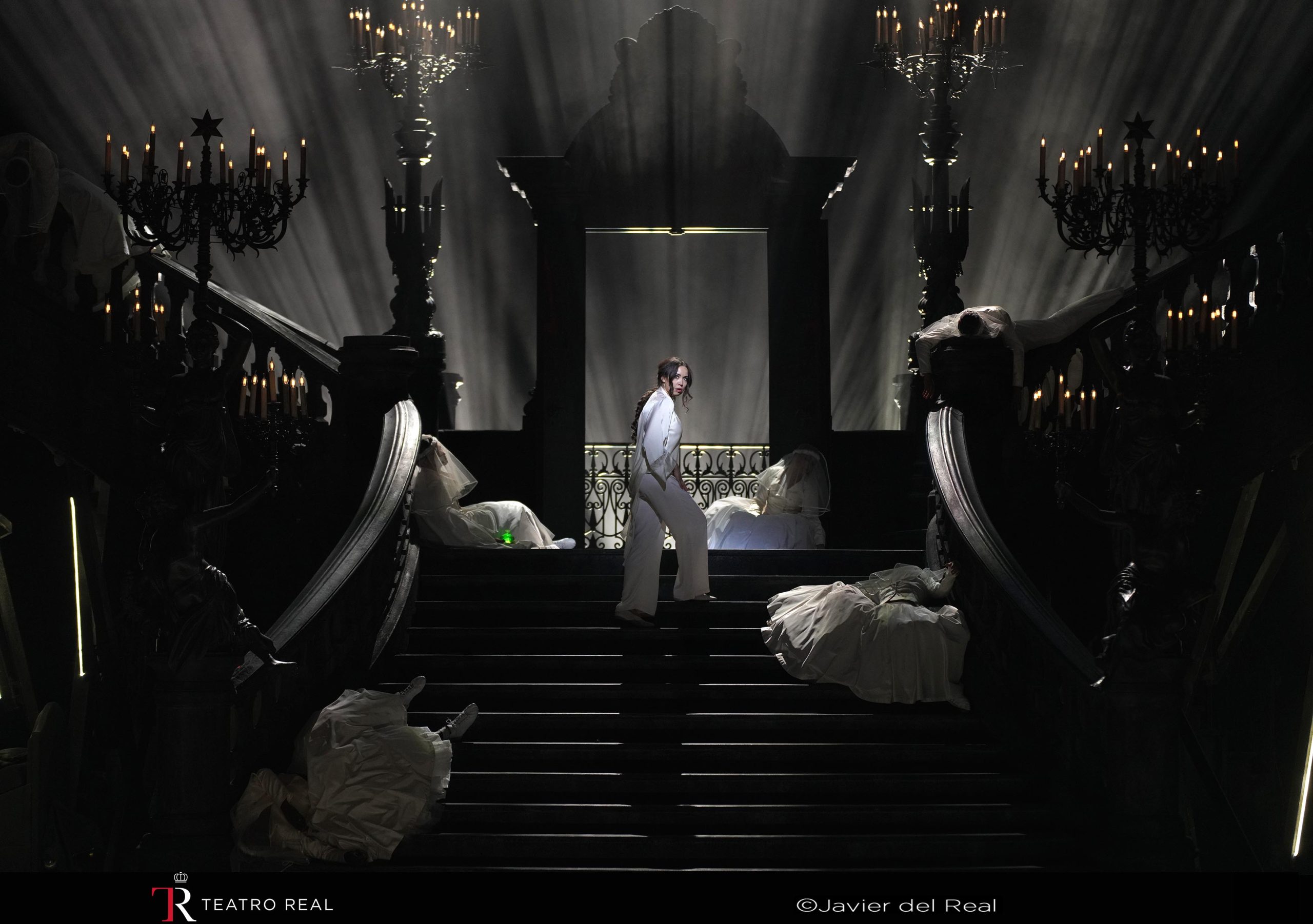
The poison scene becomes one of the evening’s most powerful and haunting moments. Here Sierra completes Juliette’s transformation. The staging introduces ghostly bridal figures and the spectral presence of Tybalt, while trembling red light behind the curtain lends the scene an atmosphere of mounting psychological tension. The ghostly brides provide an effective visual backdrop, though the extended choreography that follows, while skilfully performed, feels somewhat at odds with the mounting musical and dramatic tension. Sierra conveys the character’s inner conflict with extraordinary conviction, every phrase charged with purpose as determination, terror, hope, and despair succeed one another in rapid succession. The scene builds inexorably towards its climax, culminating in a final note delivered with breathtaking force.
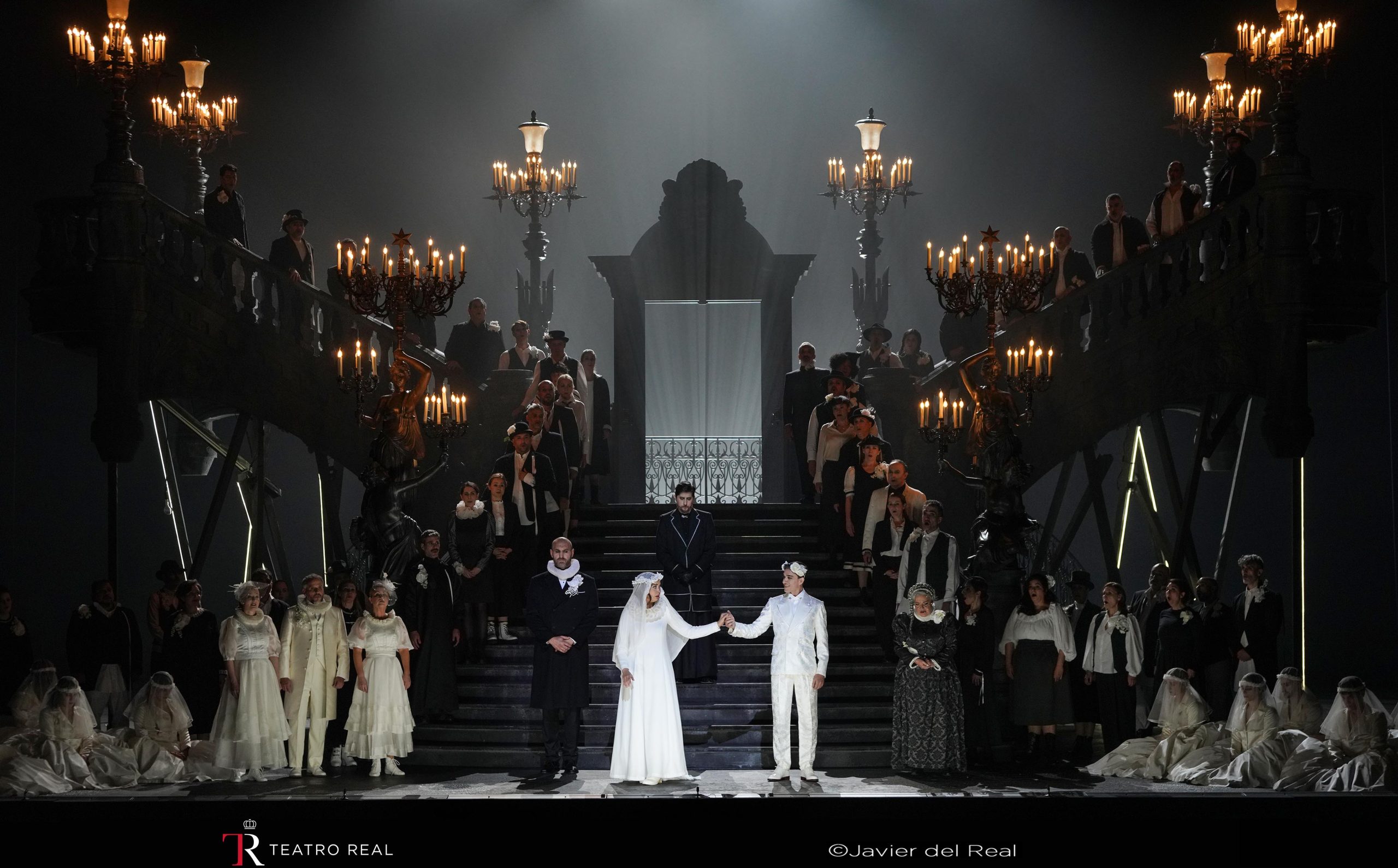
The tension of the poison scene extends into a wedding that resembles a mourning ritual more than a celebration. Against a backdrop of ghostly brides and a chorus dressed in black and white, Juliette and Paris appear entirely in white. This sense of foreboding continues into Juliette’s funeral before the action moves to the crypt.
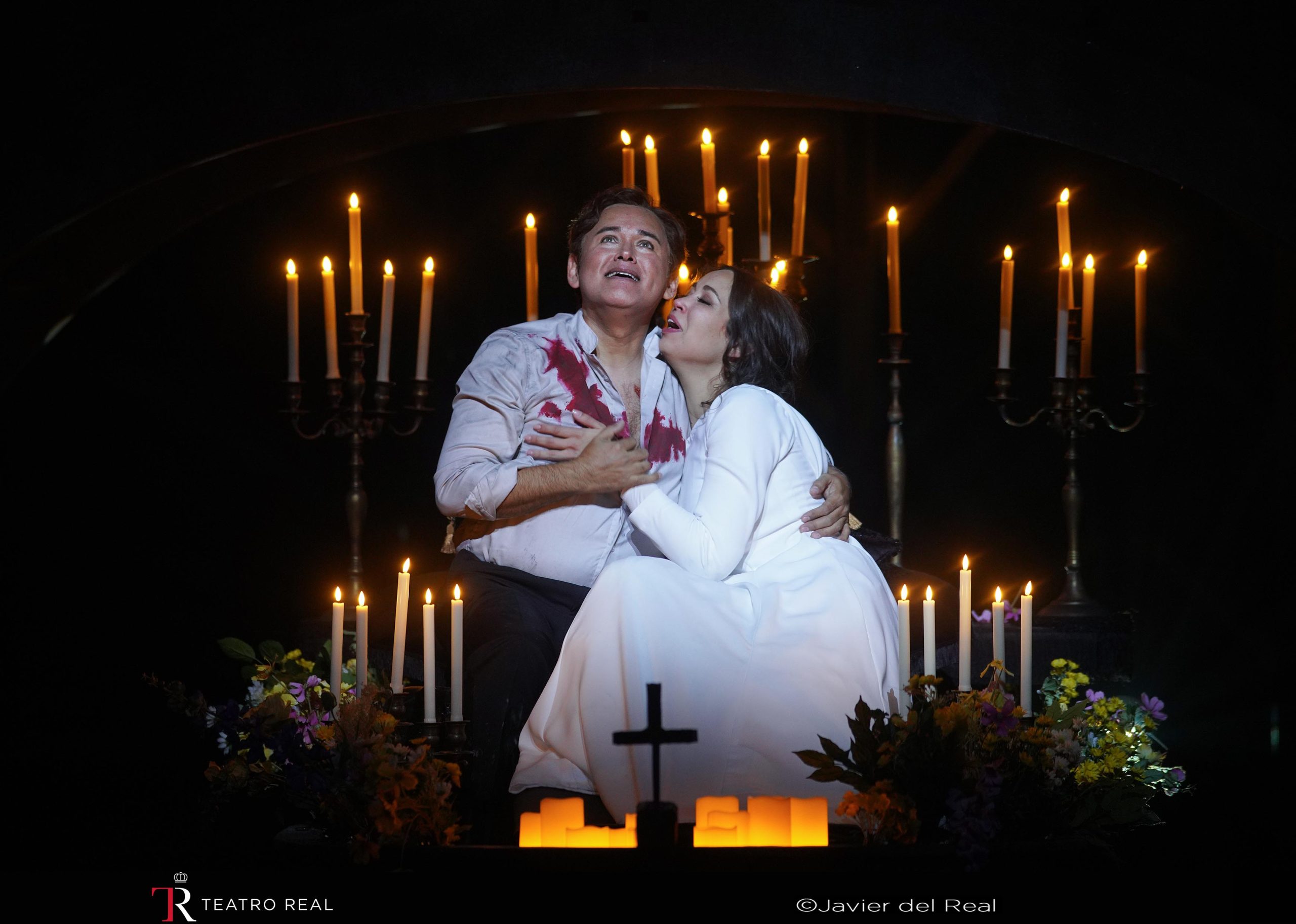
Here, Thomas Jolly returns to the image of Frère Laurent’s boat, now transformed into Juliette’s tomb and surrounded by flowers and candles. The visual connection between the two scenes proves effective, while the simplicity of the setting returns the focus to the two lovers.
Camarena brings raw emotional force to Romeo’s final appearance, conveying grief, despair, and tenderness with equal conviction. When Juliette awakens, the reunion is brief yet deeply moving. Sierra and Camarena draw on the rapport developed throughout the evening, allowing the final duet to unfold with growing emotional urgency. Together, they give the final scene remarkable emotional weight, bringing the opera to a powerful conclusion.
While Thomas Jolly’s staging occasionally verges on excess and not all of its visual ideas prove equally effective, Roméo et Juliette remains a spectacular theatrical experience, rich in striking visual imagery and sustained by compelling musical and dramatic performances. At its centre stand Nadine Sierra and Javier Camarena, whose portrayals ensure that the tragedy remains profoundly human, a reminder that, more than four centuries later, there remains no tale of greater sorrow than that of Juliet and her Romeo.
Catrine N.Andro
Hotel Chateau Eniseli Bagrationi
Cristina Bersanelli