
Marina Rebeka On the Living Voice: Imperfection and the Beauty of Individualism

photo Brescia e Amisano©Teatro alla Scala
There are different ways of entering the water. Usually, we begin cautiously, adjusting inch by inch before fully submerging.
There are rarer exceptions, waters so deep and so untamed that hesitation becomes impossible, and the only response is to dive, where something essential begins to reveal itself.
That is what a conversation with Marina Rebeka feels like.
In this edition of The Voice in Twelve Keys, we move beyond the safety of the shore to explore a way of thinking about singing that shifts from control toward presence. Here, the voice remains in motion, shaped by the body, the moment, and the person behind it.
From that immersion, a particular way of thinking about the voice begins to surface. There is no such thing as the same voice twice. For Marina Rebeka, the voice resists repetition, it lives within a body that is never constant. Especially for a woman, it follows rhythms unseen by the audience but impossible to ignore.
“In a world of artificial intelligence, of perfection, of things that can be repeated endlessly,” she reflects, “the only thing that remains truly human is imperfection. It’s possible that I will miss a note. It’s possible that something will crack. But that’s life. That’s what makes it real.”
For her, this is not a flaw, but the very heart of the art. To expect the voice to be the same each night, or to compare it to someone else, is to misunderstand. “And actually, that’s the beauty of it,” she says, pointing to the essence of a living art, a voice that reacts, evolves, and cannot be fixed in place.
It is in Norma that everything is put to the test. A role shaped by memory and comparison becomes, in her hands, something far less fixed. The question is no longer how it was sung before, but what it means now. When asked how she approaches Casta diva, “It is a prayer,” she says “and each of us prays in our own way.” Like any prayer, it cannot be standardized; it is shaped by the artist, by their state of mind, and by the moment itself, and in that, comparison loses its meaning.
While Norma remains central to her repertoire, her approach is grounded in a clear sense of reality, both musical and physical. She has recorded the role integral, but on stage she makes different choices. Cuts are not a compromise, but a necessity when integrity is at stake.

photo©Luciano Romano – Teatro di San Carlo Nabucco
Certain passages accumulate. The duet with Pollione is one of them. “If I have to do it two times, it takes much more energy from me,” she says. Repetition demands more colour, more intention, more from the body, and if pushed too far, it risks losing its impact. What works in concert does not always hold in performance, where movement and staging draw from the same reserve.
Her position is clear: if a role cannot be sustained in full, she would rather step aside. In Norma, it is not just about singing, but about embodying what she calls a “huge amount of personality.” Unlike Madama Butterfly, where the orchestration can sustain the drama, bel canto offers no such protection. This is where, she suggests, misunderstandings begin. “People say bel canto is boring. It’s not, it’s genius.” For her, that is code: “Rossini taught me that. The notes mean nothing unless you understand what they express.”
If Norma continues to evolve with her, Violetta followed a different path, one she consciously chose to end. It was a role that stayed with her over the years. “One thing is you sing Violetta at twenty-seven,” she reflects, “and another when you have lived more. The voice matures. You are a different person.” That change was not only felt but heard. Comparing earlier and later recordings, the difference was clear. “You could hear it,” she says.
After one final return, she recognised the moment. “In the end, I said, that’s it.” The response around her only sharpened the paradox: “This was the best Violetta I’ve ever heard.” And yet, it was precisely then that she chose to let it go. “It’s extremely important to leave it in its prime,” she explains, rather than allow it to fade.
There is also a question of honesty, with herself and with the audience: “I really want to enjoy it,” she says. If that freedom disappears, so does the meaning “I’d rather enjoy two hours of singing than five minutes of applause.” There is, perhaps, a quiet satisfaction in knowing that La Traviata has been preserved as she wanted, in recording.
Marina believes there is a right moment for everything, as it was for saying farewell to Violetta, so too for approaching Madama Butterfly. It was not a role she rushed into. It took nearly a decade. “It’s not so plain,” she says, not because of technique, but of comprehension.

photo © Tatyana Vlasova
What she resists is any simplification. Like Aida, it is not about surface ideas of identity or culture, but about reaching the essence beneath them. To approach Madama Butterfly, she had to understand not only the psychology, but how deeply culture is embedded in the character itself.
What she finds is not fragility, but an extreme stubbornness, almost that of a teenager. This is her Cio-Cio-San: not passive, but deliberate. Even at fifteen, she chooses to go against her religion, her system, her people, to build another life. And when reality turns against her, it is that same stubbornness that prevents her from turning back. “She wouldn’t be able to survive that she has lost again against the whole world,” Marina concludes.
Reaching this understanding required more than musical preparation. She speaks of going to Japan, reading, discovering a far more complex reality, one where a girl of fifteen is already formed, and aware of her place. And that leads her to a question that remains: where, in Madama Butterfly, is the childhood at all?
This approach extends across her roles. Whether Elisabetta, Lucrezia Borgia, or Eleonora, the principle remains: the voice alone is never enough. Each exists within a distinct world and demands its own point of entry. It means looking back, understanding how and why it was written. “Singing is just the pretext,” she admits. “What I love is getting inside the character, like a psychologist.” She traces a central thread, reconstructing the role as something inseparable from story and music, unfolding in layers. That process of understanding and discovery shapes the voice and the interpretation on stage.

photo © Tatyana Vlasova
Her thinking extends across her repertoire and into the structure of the music itself. Speaking of Abigaille, she does not treat such roles as fixed vocal categories, but as part of a broader historical language. What appears as dramatic writing often reveals a bel canto foundation, the arc, the placement of scenes, the progression from aria to ensemble to finale, demanding not just power, but understanding.
For her, it is a question of approach. These roles can be forced into a purely dramatic mould, but at the cost of what is written into them. The technique belongs to an earlier tradition, closer to a dramatic bel canto than to the heavier sound often associated with later Verdi. This awareness extends further, to orchestration and sound itself. What we hear today is not what composers originally heard: lighter voices, different materials, lower pitch, a different balance between voice and orchestra. To ignore this is to risk misunderstanding the role.
The same questioning appears when she speaks about Aida. For her, it is no direct easy character. Unlike Amneris, who is open in her emotions, Aida remains elusive. “When she arrives, what you hear is not forte, but piano, halftones, not a clear melody,” she says. “So, it’s beautiful, but we don’t know exactly what it is.” And That uncertainty becomes the starting point.
Not every role invites the same affinity. Lucrezia is one she approaches with distance. The resistance is not musical, but psychological. “It’s not written logically… the passage from the evil to the loving mother is too harsh.” For her, this lack of coherence creates a fracture that beauty alone cannot resolve, “for me, beauty is secondary. The psychological aspect comes first.”
Some roles demand more than interpretation; they require a depth that does not remain on stage. Medea is one of them. “I will not do it anymore,” she says. It is not about technique. “Maybe I could do it. But I don’t want to face this personality anymore.” What makes it difficult is how deeply it must be inhabited. “You go too deep.” The rituals and destruction at its core demand an immersion that does not easily recede.
And yet, it remains “one of my most favourite roles.” She understands it, can analyse it, justify it. “I love the music. It is heavenly.” But that is precisely where she draws the line. Understanding is not the same as wanting to live through it again. “I’ve had enough of that.”
She always arrives with her own prepared vision of the character, but the process is to find common ground with the stage director and musically as well. Unlike film or theatre actors, who rehearse and build together, singers must arrive already formed. That means understanding not only the role, but the score itself, why Puccini wrote a phrase in a certain way, why a specific accent appears, what it is meant to express.
At the core of her thinking lies a principle she returns to with clarity: art begins with position. “We have to have our opinion,” she says. Without it, the work loses its centre, “who is the artist within it?” What she resists is passivity: the artist is not there to please or reproduce, but to take responsibility and stand behind what is being done. Without that, everything flattens, “otherwise, we are all the same.”
This extends beyond the singer to the entire structure of performance. Collaboration does not mean the absence of direction, it requires it. A conductor, a stage director, any leading force within the process must carry a clear vision. Not to dominate, but to define. “You cannot please everyone,” she says. “You have to say what you think.”
What emerges just as strongly is her view of collaboration and how fragile that balance can be. Opera, as she sees it, depends on the alignment of three forces: singer, conductor, and stage director. If one dominates, the whole structure shifts. “If we want to reach catharsis,” she says, “all three have to work together.”
In practice, this is rarely simple. Each operates with its own logic: for the conductor, tempo is structure; “For them it’s tempo. For me, it’s my health,” she says. Each voice follows its own rhythm, shaped by breath and body, ignoring it is not only a musical risk, but a physical one.

photo © Tatyana Vlasova
The relationship with stage directors adds another layer. She does not reject interpretation but resists what cannot be fully grasped. The singer becomes the instrument of the director’s vision only when it is clearly communicated, otherwise, the connection breaks. “If I don’t understand it, it doesn’t work.” For her, the action must grow from the music, not compete with it. This becomes most visible in contemporary staging. She is not opposed to modern productions, but to modernity as an end. The question is not whether something is traditional or contemporary, but whether it holds. Too often, the impulse to provoke replaces storytelling: violence, symbolism, fragmentation, when used without necessity, distract the audience’s ability to follow. In a world saturated with noise, the stage need not replicate reality, but offer something else: beauty and transformation, not escape, but a place where imagination restores what daily life erodes.
When she speaks about what draws people to opera across languages and cultures, she points to something beyond words, something felt rather than translated. Music, she suggests, can calm, restore, and shift the inner state, experienced not only as art, but as balance, even as healing.
When the question turns to the future, she is clear: opera is not in competition with pop culture, nor should it try to be. What matters is access, not simplification, but openness, allowing people to see how music is made and how a role comes to life. Understanding is the turning point; once people begin to follow, the distance disappears.
Opera remains a total art form, bringing together music, acting, movement, visuality, and poetry. Its power lies in offering another world to enter. For her, staging is not ideological, but a question of coherence, creating a space where all elements align without excess. And perhaps it is precisely this complexity that draws people in, because for her “complexity itself invites curiosity.”
Collaboration on stage is another cornerstone of integrity. What defines a strong partnership cannot be constructed in advance. “Every show is very different,” she says. With some partners, there is an unspoken understanding. She mentions Ludovic Tézier as one of those collaborators. “We understand each other. We don’t even need to rehearse.” It cannot be created, “you must have this click. It’s there or it’s not.” Each partner brings a different energy, shaping the performance. Even without that connection, a way forward can be found. It requires adjustment and awareness, “you have to know with whom you are dealing.” “It always influences the performance,” she says, but she works within it, shaping the interaction moment by moment into a performance she believes in.
Her approach to recording reflects the same refusal of uniformity. Sound, for her, is “art… not just a technical tool.” She resists the idea that voices can be captured in the same way. Voices are not interchangeable; they differ in range, colour, and presence. To record them identically is to erase their individuality.
This led her to co-found label, Prima Classic, a space to realise these ideas without compromise. It involves careful selection, listening, and recognising what is individual, what cannot be reduced to a formula.
At the centre is a question: why is there so little room for search? The aim may be to approach the live voice, yet that is already a contradiction. The recorded voice exists close to the microphone, while the real voice unfolds in space. “It is almost impossible,” she says, but that impossibility should invite experimentation, not conformity.

photo©Marko Rass
The challenge extends beyond the studio. Sound changes depending on how it is heard, on headphones, in a car, through speakers. “So for whom do I mix?” she asks. Behind this lies a larger shift: streaming platforms now shape listening. If you are not present there, you are invisible, but what is gained in reach often comes at the cost of sound, as it becomes compressed.
For her, this makes the process inherently complex. Recording is not simply preservation, but another form of interpretation, driven by the same search for individuality as performance itself.
From there, the conversation moves into more personal territory. Between recordings, editing, chamber music, performances, and debuts, Marina’s schedule leaves little space. It demands order and discipline, but for her, it must remain in proportion. “I start with making order in my brain” she says. It creates clarity, but taken too far, something is lost. “When it’s too ordered, I don’t feel the wholeness.” Discipline matters, but only to a point. “A little bit of nonsense is good,” she adds. “You have to learn the rules to know how to break them.”
That awareness extends into how she experiences herself on stage. While she loves acting, she does not enjoy watching herself, aware of expressions she cannot control. “I’m emotional! that’s what comes,” she says. In the end, it becomes acceptance. “This is me. I cannot go away from what I am. If I have wrinkles, then I have wrinkles”.
It is here that the subject of fear emerges. The most immediate is simple: not being ready. But what concerns her more is the gap that can grow between the artist and reality. “I’m afraid to become a diva,” she says, in what she calls the “bad sense” of the word. “When one thinks everything is achieved, that’s the beginning of the end.” What makes it dangerous is that it is invisible from within. “You don’t see it,” she says, and you don’t listen.
What keeps her grounded is balance extending beyond the stage. The intensity of performance is enough. What she needs instead is quiet way to restore energy. Time at home with family, moments of stillness that allow her to return to herself.
As we move to close, the question of the path itself feels inevitable. It is easy to say one would change nothing; what matters is to feel that it is true. Her path has been long and far from linear. From a thirteen-year-old who first chose opera, through the years that followed, with their ups and downs, losing her voice and rebuilding it, and something left unspoken for now, to the stages of the world’s major opera houses.
She does not dwell on what might have been, only on where that path has led, and on the quiet recognition that comes with it: that the decision once made has, been fulfilled. To be able to say to that thirteen-year-old self, you made it real.
Perhaps this is where we return to the beginning. To the water, not as something entered once, but as a force that continues to move, and resist being held.

photo©Marko Rass
Marina Rebeka’s artistry mirrors this fluidity. Her voice does not simply inhabit a role; it immerses itself in it, moving with a power that is both elemental and precise.
The Voice in Twelve Keys suggests a structure, a map for the infinite. And yet something remains just beyond it.
This is the thirteenth key.
A reminder that the essence of the voice cannot be contained within a frame.
Catrine N.Andro
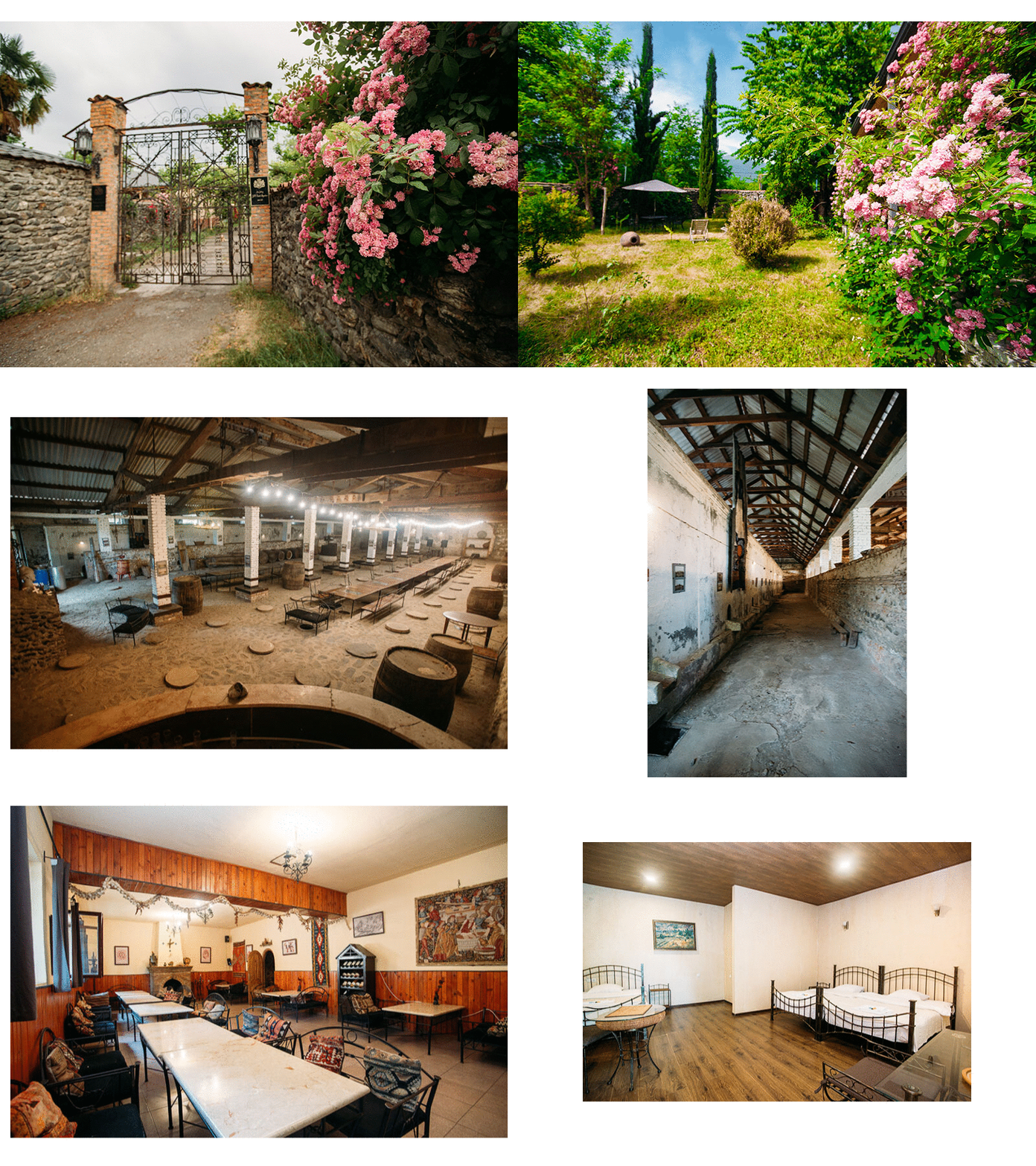
Hotel Chateau Eniseli Bagrationi
Cristina Bersanelli