
BARCELONA: Juan Diego Flórez Recital – 19 March 2026
JUAN DIEGO FLÓREZ
Tenor
Vincenzo Scalera
Piano
Gran Teatre del Liceu,19 March 2026
The final notes of Juan Diego Flórez’s highly anticipated Spanish tour rang out in Barcelona on 19 March. Accompanied by the masterful Vincenzo Scalera at the piano, the Peruvian tenor captivated the Liceu audience, bringing to a close a series of performances that had also included Zaragoza, Madrid, and Seville.
Some voices carry a particular atmosphere with them from the moment they enter a hall, shaped by memory, style, and a unique sound. Flórez remains one of those artists, and the applause that greeted him onstage made that immediately clear.
With Juan Diego Flórez and Vincenzo Scalera, the recital unfolds through a variety of textures and atmospheres: operatic arias with piano, solo moments that give Scalera his own expressive space, and, in the encores, the added warmth and intimacy of the guitar. The programme ranged across Mozart, Rossini, zarzuela, French repertoire, and Verdi, revealing not only the tenor’s stylistic versatility, but also his elegance of line, technical assurance, and, above all, instinctive musical intelligence.
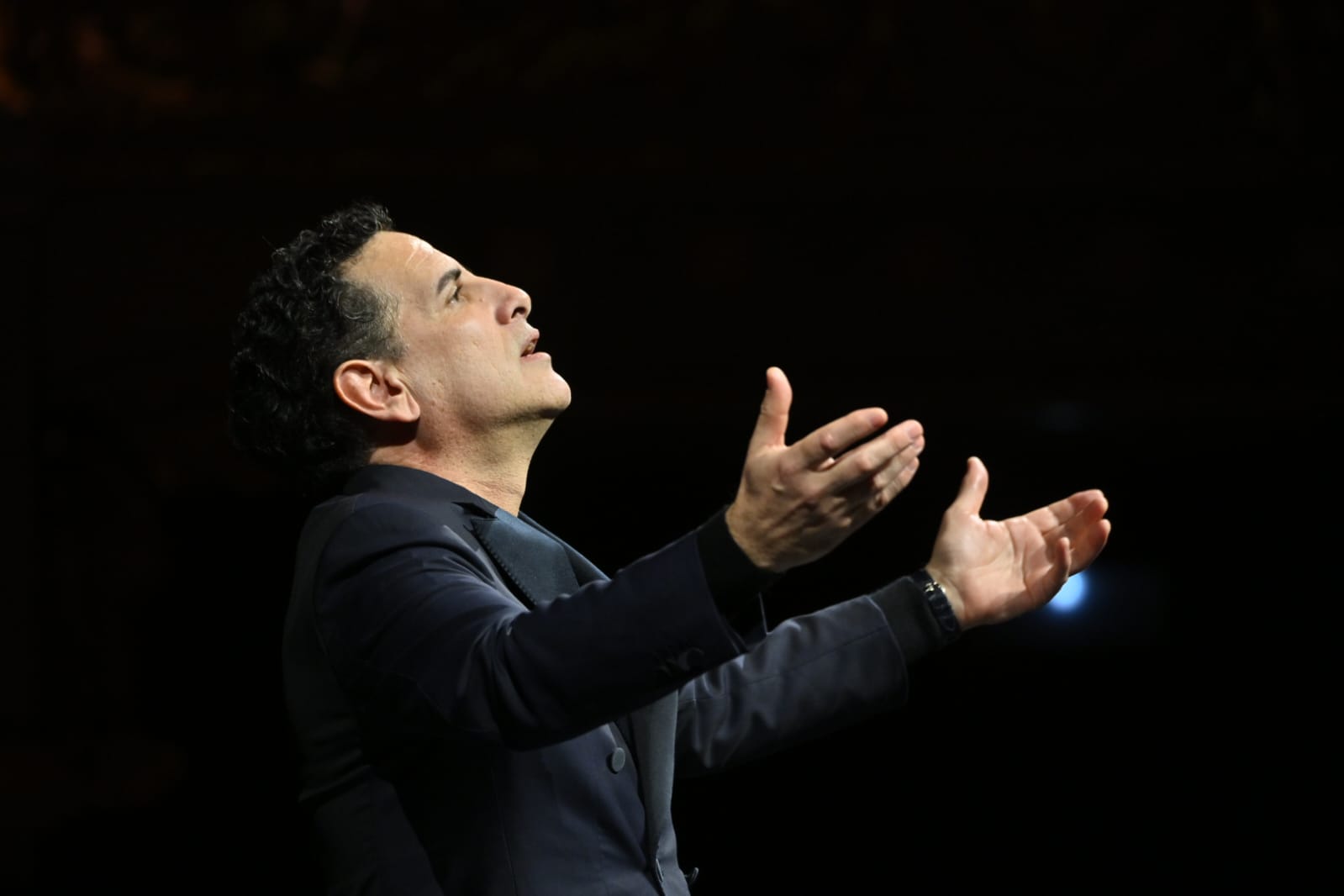
The recital opened with Mozart, beginning with Misero! O sogno… Aura che intorno K. 431, followed by two arias from La clemenza di Tito: Del più sublime soglio and Se all’impero, amici Dei! This was a fitting point of departure. Flórez approached these pieces with characteristic refinement. The phrasing remained poised and lucid, the voice still carrying that unmistakable brightness and focus that have long been central to his vocal identity.
photo©Antoni Bofill
The Rossini section brought a mood and temperament of its own. After Scalera’s deft and stylish performance of Une bagatelle from Péchés de vieillesse, Flórez turned to Le Sylvain and Quell’alme pupille from La pietra del paragone. In Le Sylvain, Flórez created a more inward atmosphere, marked by delicacy and a quiet sense of melancholy. Quell’alme pupille was lighter and more lively, while remaining deeply wistful. Once again, it was a reminder of the repertoire in which his name became almost synonymous with a certain ideal of bel canto singing. The agility remains impressively intact, now colored by new shades, and the ease with which he brings musical and emotional depth to every phrase is evident. Did one perhaps wish for a different choice of arias, with more of that Rossinian effervescence? Perhaps. Yet when listening to a beloved tenor, whatever he offers never quite feels enough.
That same sense of style carried into Boieldieu’s Viens, gentille dame from La dame blanche, sung with sensitivity and sustained by a graceful legato. The aria progressed beautifully from delicacy into quicker, more brilliant notes, rising toward its brighter moments before settling back into quieter waters. It made for a fitting close to the first half.
photo©Antoni Bofill
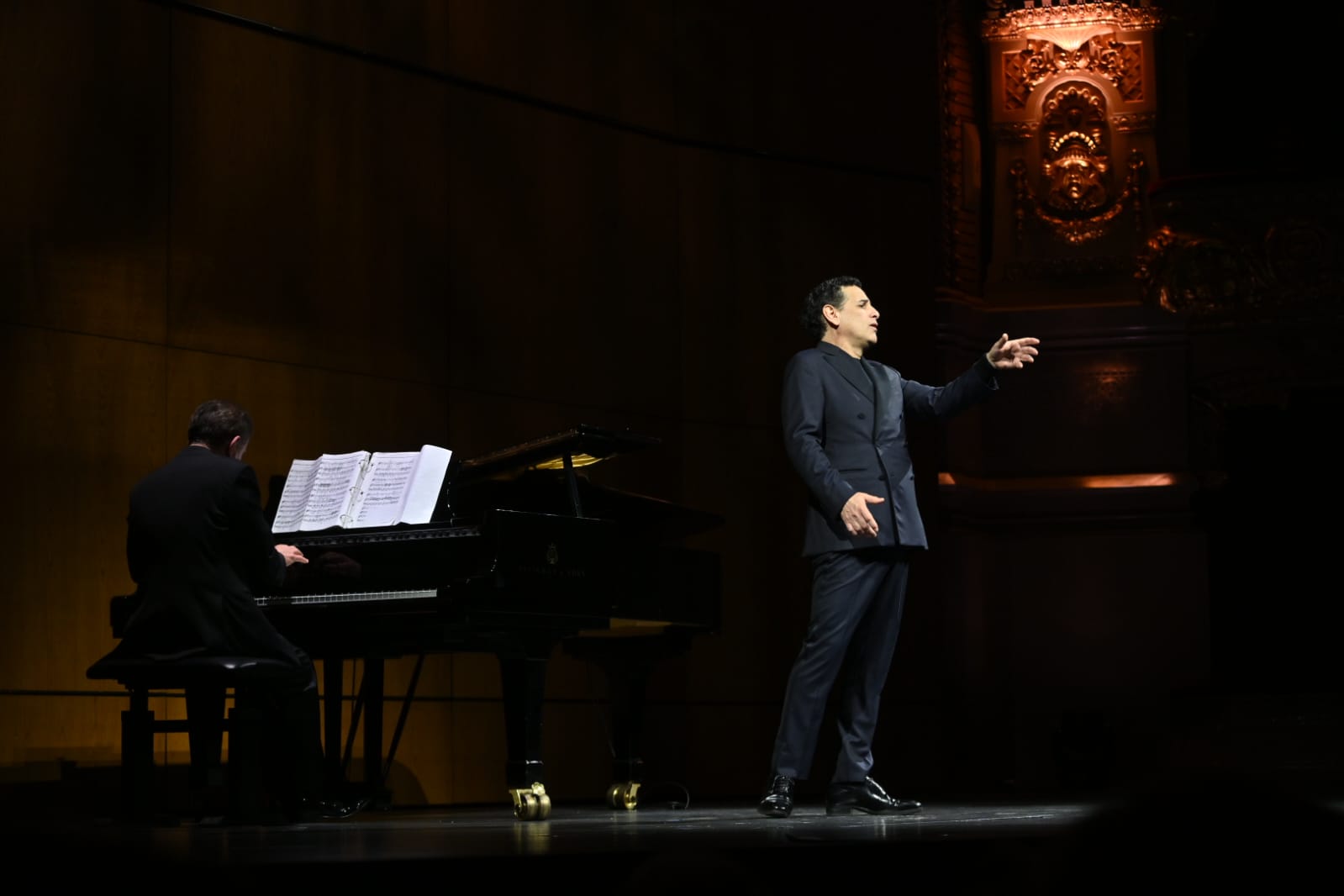
After the intermission, the recital moved into the world of zarzuela. In Chapí’s Flores purísimas and Vives’s Por el humo se sabe dónde está el fuego, Flórez drew on a different vocal and expressive palette, with verbal nuance, playfulness, and emotional pulse giving the storytelling an immediate presence. A personal highlight for me was José Serrano’s Te quiero morena, where rhythmic vitality and theatrical spark came together, and Flórez brought to it a natural sense of spontaneity and character.
While the spotlight naturally follows one of the world’s most celebrated tenors, much of the evening’s quiet magic at the Liceu lay in the understanding between Flórez and Scalera. It often felt like a shared breath, as if Scalera could sense the direction of a phrase almost before it had fully taken shape. His solo contributions, Lecuona’s dazzling Mazurka glissando and later Liszt’s Consolation No. 3, offered both contrast and continuity within the programme. The first brought brilliance and rhythmic flair, the second a moment of introspective stillness before the evening’s final stretch. Throughout, his playing was elegant and deeply responsive.
The recital’s final sequence entered the emotional territory of French repertoire. Massenet’s Pourquoi me réveiller? from Werther was presented with emotional depth, its high-lying phrases approached with ease. Flórez’s current interpretation of Salut! demeure chaste et pure from Faust was particularly exquisite. Sung with luminous phrasing and admirable control, it revealed both lyrical elevation and a quiet undercurrent of longing and reverence.
The official programme concluded with Verdi, in La mia letizia infondere… Come poteva un angelo from I Lombardi alla prima crociata. Here, the evening briefly opened into a more dramatic space. Flórez approached the music not by forcing weight into it but on his own terms, with care for line, phrasing, and stylistic poise.
And yet, as is often the case with recitals, the official programme told only part of the story. There is always something special about the encores, and one never quite knows what may come next. Of course, certain favorites must appear, but there is usually room for surprise as well.
photo©Antoni Bofill
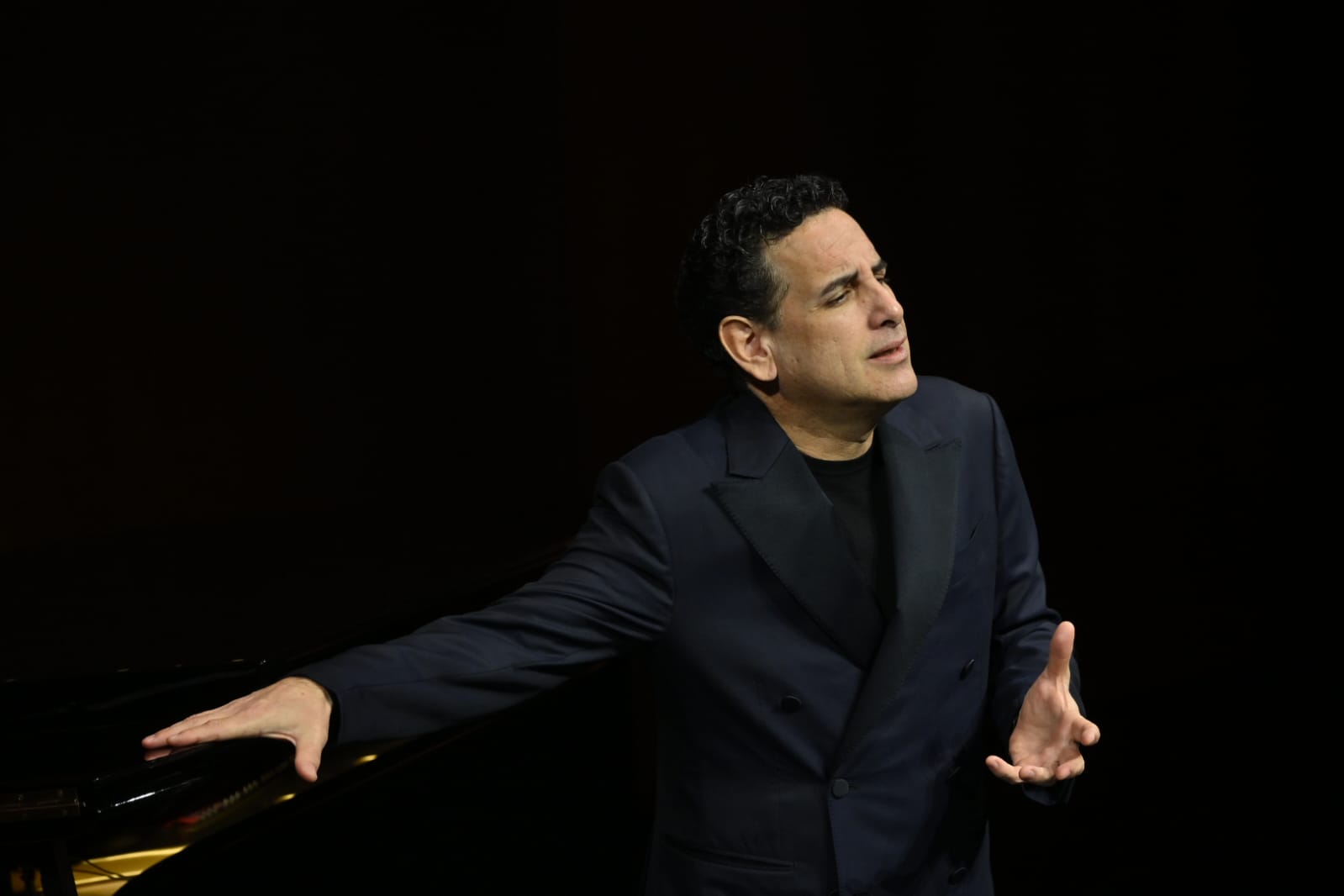
The first encore, Ah! mes amis, once again had the audience dancing in spirit, with Flórez’s high Cs shining with undiminished virtuosity. The piano then gave way to guitar for the tender Neapolitan song I’ te vurria vasà by Edoardo Di Capua. Bringing a part of his native Peru to the stage, Flórez followed with Chabuca Granda’s songs, Flor de la canela, Bello durmiente, and Fina estampa, with Bello durmiente emerging as a moving moment, imbued with tenderness and quiet emotional intimacy. The encore sequence also embraced two beloved Mexican songs, José Alfredo Jiménez’s Ella, delivered with ringing top notes, and Tomás Méndez’s Cucurrucucú paloma, with the suspended, lingering phrases that have become such a distinctive part of his signature, bringing the recital to its close.
As the final applause faded and the hall slowly settled, what remained was the impression of an evening defined by elegance, style, and deep musical emotion. Above all, it revealed an artist who knows exactly what his voice is, what it can still do beautifully, and how to make it speak with warmth, sincerity, and character.
Caterine N.Andro
Hotel Chateau Eniseli Bagrationi
Cristina Bersanelli